
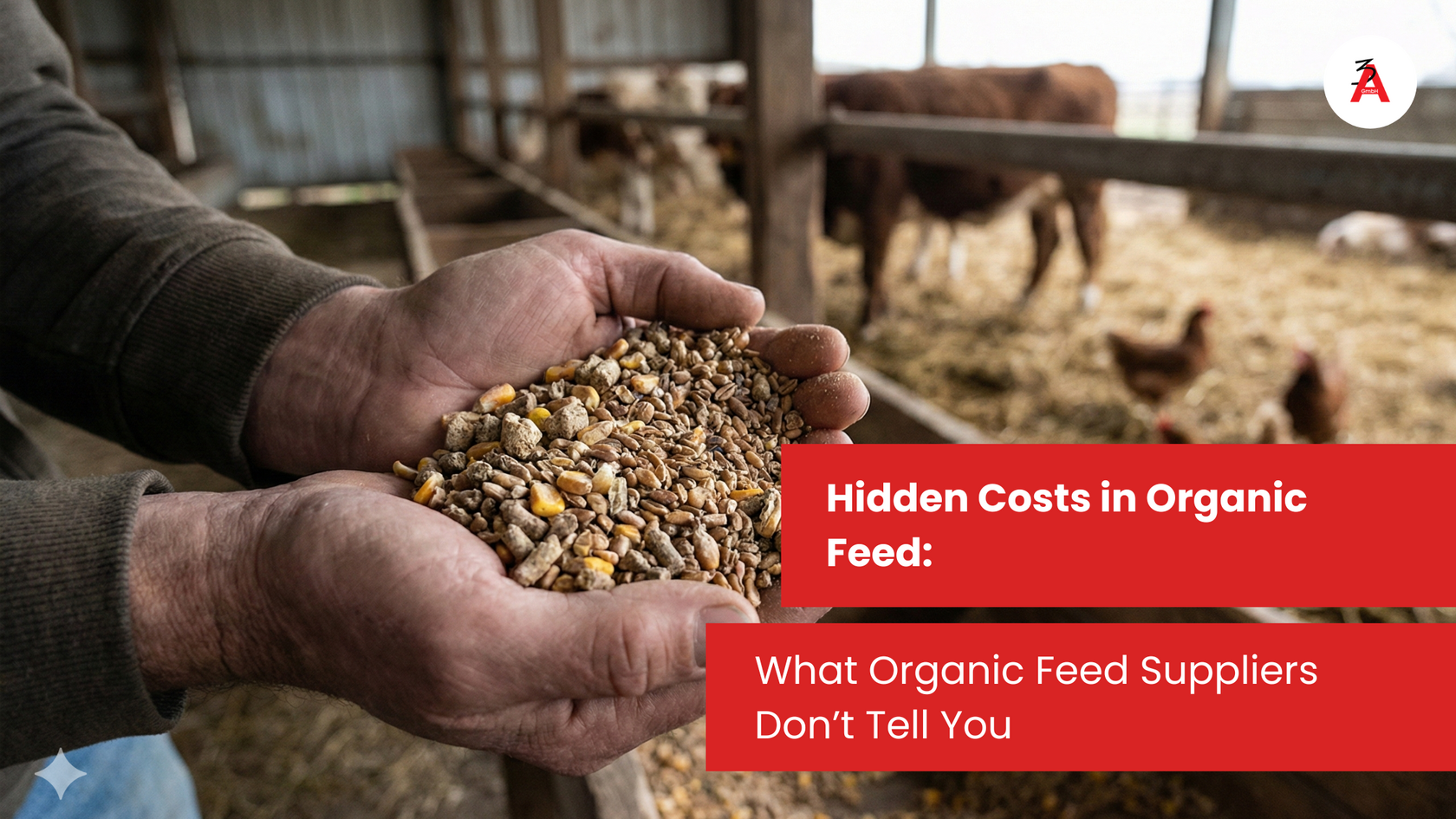
The demand for organic livestock nutrition has grown rapidly as farmers respond to consumer expectations, regulatory pressure, and long-term sustainability goals. However, while organic feeding promises healthier animals and cleaner production, the reality is more complex. Many Organic feed suppliers focus on certification labels and ingredient lists—but rarely discuss the hidden costs that quietly impact farm profitability.
At Agrovet Animal Health Austria, we believe transparency in nutrition is essential. Organic feed must not only meet standards—it must perform consistently under real farm conditions.
The Illusion of “Organic Equals Efficient”
One of the most common misconceptions promoted by Organic feed suppliers is that organic feed automatically delivers optimal performance. In practice, organic raw materials often show:
- Lower and variable nutrient density
- Reduced amino acid availability
- Higher fiber and anti-nutritional factors
Without targeted nutritional support, animals may consume more feed to meet the same requirements—driving up feed costs while performance plateaus.
Hidden Cost #1: Poor Feed Conversion Efficiency
Organic diets frequently lack precision balancing. When amino acids, minerals, or energy sources are not efficiently utilized, animals convert feed less effectively.
This results in:
- Higher feed intake per unit of output
- Increased manure and nutrient losses
- Slower growth or inconsistent milk yield
Over time, poor feed efficiency silently erodes margins—especially in high-input dairy and poultry systems.
Hidden Cost #2: Health Challenges Disguised as “Transition Stress”
Many Organic feed suppliers underplay the link between nutrition gaps and animal health issues. Digestive disturbances, metabolic stress, reduced immunity, and fertility challenges are often blamed on management or weather.
In reality, organic feed without functional support can increase vulnerability to:
- Subclinical mastitis
- Digestive disorders
- Mineral imbalances
- Immune suppression during production peaks
Preventive nutrition is often missing from standard organic feed programs.
Hidden Cost #3: Over-Reliance on Expensive Raw Materials
To compensate for lower nutrient availability, some suppliers increase inclusion rates of costly organic ingredients. This inflates feed prices without guaranteeing biological efficiency.
What is rarely discussed is that organic feeding requires functional additives, not just organic raw materials, to optimize nutrient absorption and metabolic efficiency.
Why Functional Nutrition Matters in Organic Systems
At Agrovet Animal Health Austria, we approach organic feeding differently. Organic nutrition must support:
- Gut health and nutrient absorption
- Metabolic efficiency
- Immune resilience
- Consistent productivity
This is where scientifically designed feed additives make the difference.
VF Care – Supporting Ruminant Health Naturally
A natural oral solution for ruminant health management
- Supports prevention and management of mastitis in dairy cows
- No withdrawal period
- Enhances overall herd health and resilience
- Contributes to improved milk productivity
- Cost-efficient alternative to routine antibiotic use
- Distinct anti-inflammatory support for ruminants
- Non-antibiotic approach aligned with responsible animal husbandry
VF Care is a plant-based oral solution formulated to support natural defense mechanisms in ruminants. Its bioactive components help maintain physiological balance, metabolic stability and consistent productivity. By strengthening the animal’s own resilience, VF Care supports responsible herd management without routine reliance on antibiotics.
Ecopol – Poultry Health Without Antibiotics
In poultry systems, Ecopol supports:
- Gut integrity and digestive efficiency
- Balanced microbial environment
- Improved feed conversion performance
- Reduced mortality pressure
- Natural immune resilience under stress
- Lower dependency on antibiotic interventions
Ecopol is a liquid solution designed for application via drinking water systems. It supports flock uniformity, digestive stability and sustainable production performance. By promoting a healthier intestinal environment and strengthening natural defenses, Ecopol enables poultry producers to maintain productivity while aligning with modern antibiotic-reduction strategies.
Hidden Cost #4: Lack of Formulation Expertise
Many Organic feed suppliers sell ingredients—not solutions. Without formulation support, farmers are left to manage:
- Nutrient imbalances
- Seasonal variability in raw materials
- Inconsistent performance across batches
Organic feeding requires deeper nutritional expertise, not fewer inputs.
The True Cost of Organic Feed Is Performance, Not Price
The biggest hidden cost is not the price per tonne—it is the cost per litre of milk, per kg of meat, or per bird marketed.
When organic feed fails to deliver:
- Feed efficiency declines
- Health costs increase
- Productivity becomes unpredictable
Sustainability without performance is not sustainable farming.
At Agrovet Animal Health Austria, We support organic systems with:
- Science-backed functional feed additives
- Performance-focused nutrition strategies
- Solutions aligned with organic and antibiotic-free standards
We believe organic feed should work with animal biology—not against it.
Conclusion: Ask Better Questions Before Choosing Organic Feed
Organic farming is the future—but only when nutrition is designed for efficiency, immunity, and profitability.
Farmers should ask Organic feed suppliers:
- How is nutrient availability optimized?
- What supports gut health and immunity?
- How are performance losses prevented?
Because the real cost of organic feed is not what appears on the invoice—it’s what shows up in animal performance.
And that is where informed nutrition makes all the difference.