
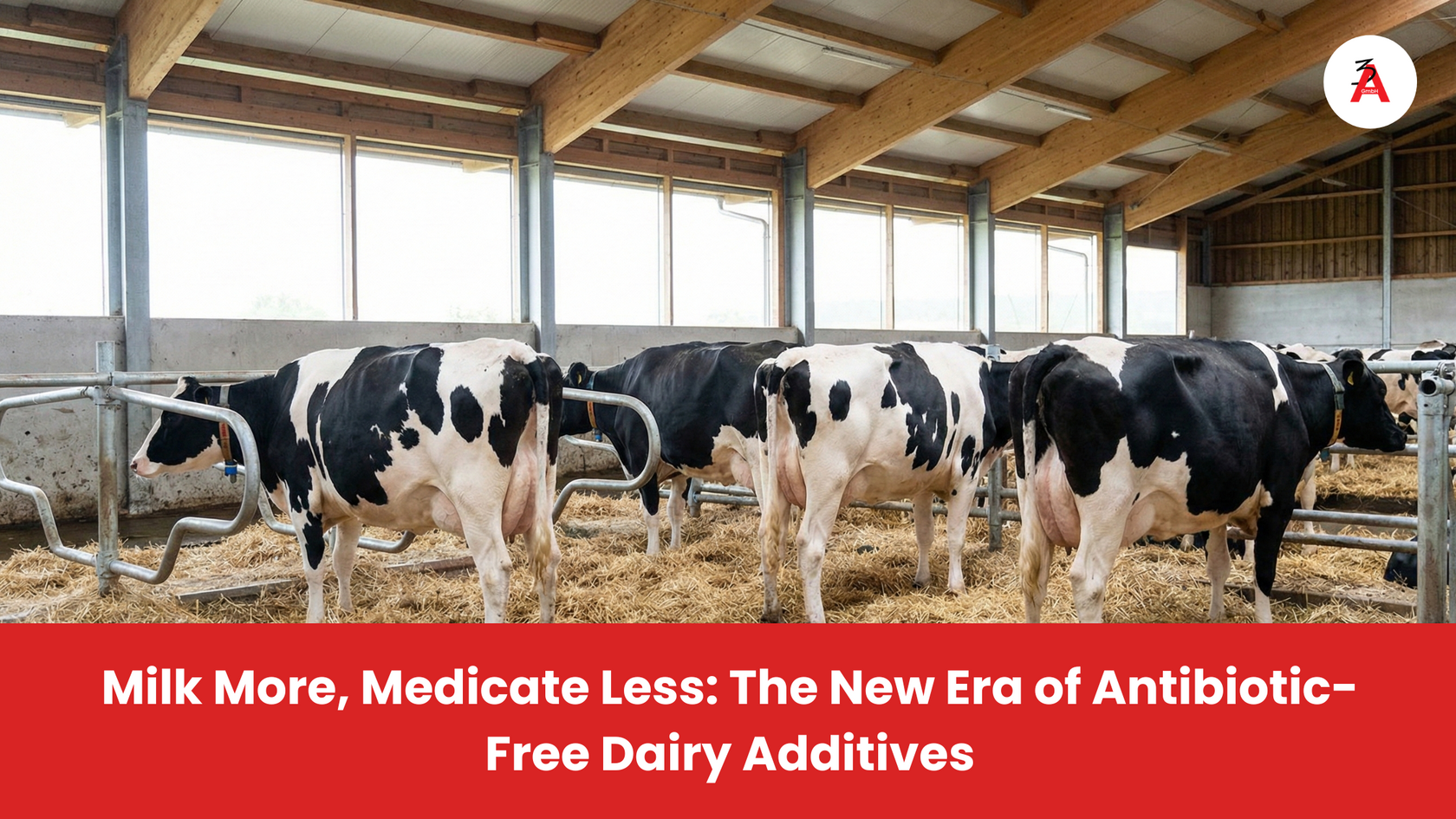
The modern dairy industry faces a critical challenge: how to maximize milk production while reducing reliance on antibiotics. At Agrovet Animal Health Austria, we understand that achieving this balance requires a preventive, nutrition-focused approach. Our milk yield improvement additives are specifically designed to strengthen cows’ immunity, optimize nutrient absorption, and improve overall productivity—all without the need for antibiotics. These additives represent a paradigm shift in dairy nutrition, emphasizing proactive health management rather than reactive treatment.
Milk yield improvement additives are carefully formulated with a combination of essential vitamins, minerals, amino acids, and bioactive compounds. Each component is chosen to support the immune system, enhance digestive efficiency, and maintain metabolic balance. This comprehensive approach ensures that dairy cows can sustain high milk yields consistently, while naturally resisting common infections such as mastitis, acidosis, and metabolic disorders. By supporting overall herd health, farmers can reduce veterinary interventions and costs, while achieving more predictable milk production outcomes.
A key advantage of these additives is their preventive power. Instead of relying on antibiotics after a disease occurs, milk yield improvement additives help cows maintain robust immunity. Stronger immune systems translate to fewer illnesses, which benefits animal welfare and aligns with global trends favoring antibiotic-free dairy production. This approach also caters to consumer demand for safe, chemical-free milk products, creating added market value for dairy farmers.
Digestive health is another critical factor in milk production. Milk yield improvement additives often include natural enzymes, probiotics, and prebiotics that support rumen function and enhance nutrient absorption. By improving digestion, cows are better able to convert feed into energy and milk, maximizing productivity and minimizing feed wastage. Improved feed efficiency not only raises milk yield but also reduces operational costs for farmers, making the entire dairy system more sustainable and profitable.
Sustainability and environmental responsibility are further benefits of incorporating milk yield improvement additives. Reducing antibiotic use lowers the risk of antimicrobial resistance in livestock populations and prevents residual chemicals from entering the food chain. Healthier cows require fewer medical interventions, reducing waste and environmental contamination. Additionally, higher productivity with optimized feed intake promotes efficient resource utilization, helping dairy farms achieve both economic and ecological sustainability.
Consistency is vital when adopting milk yield improvement additives. At Agrovet Animal Health Austria, every batch is produced under strict quality control standards to ensure uniform potency and reliable performance. This reliability allows farmers to plan feeding programs with confidence, avoiding fluctuations in milk yield caused by inconsistent feed quality. Consistent nutrition supports reproductive health, lactation cycles, and overall herd productivity, making farm management more predictable and effective.
The economic benefits of using milk yield improvement additives are significant. Healthier cows produce more milk with fewer veterinary costs and lower mortality risks. Reduced dependency on antibiotics cuts direct medication expenses, while antibiotic-free milk commands higher market value due to consumer preference for natural, safe dairy products. The combination of higher yields, reduced costs, and improved product quality creates a strong return on investment for farmers committed to modern, preventive nutrition strategies.
To achieve the best results, milk yield improvement additives should be incorporated based on herd-specific requirements, including age, lactation stage, and environmental conditions. Agrovet Animal Health Austria offers guidance for selecting the most appropriate additive combinations, optimizing feeding routines, and monitoring herd performance. This tailored approach ensures maximum benefits, from improved milk quantity and quality to long-term herd health.
In conclusion, the era of "milk more, medicate less" is here. By focusing on preventive nutrition through milk yield improvement additives, farmers can raise healthier, more productive herds while reducing antibiotic use. These additives support immunity, enhance digestion, and improve metabolic balance, creating conditions for consistent, high-quality milk production.
Investing in milk yield improvement additives is not just a feeding strategy—it is a long-term commitment to animal health, farm profitability, and sustainable dairy farming. With the right nutrition, farms can thrive with disease-free, antibiotic-free cows, reflecting the modern approach to dairy production. Agrovet Animal Health Austria continues to provide science-backed, natural solutions that empower dairy farmers to achieve these goals, ensuring that every litre of milk contributes to both animal wellness and farm profitability.
Milk yield improvement additives are carefully formulated with a combination of essential vitamins, minerals, amino acids, and bioactive compounds. Each component is chosen to support the immune system, enhance digestive efficiency, and maintain metabolic balance. This comprehensive approach ensures that dairy cows can sustain high milk yields consistently, while naturally resisting common infections such as mastitis, acidosis, and metabolic disorders. By supporting overall herd health, farmers can reduce veterinary interventions and costs, while achieving more predictable milk production outcomes.
A key advantage of these additives is their preventive power. Instead of relying on antibiotics after a disease occurs, milk yield improvement additives help cows maintain robust immunity. Stronger immune systems translate to fewer illnesses, which benefits animal welfare and aligns with global trends favoring antibiotic-free dairy production. This approach also caters to consumer demand for safe, chemical-free milk products, creating added market value for dairy farmers.
Digestive health is another critical factor in milk production. Milk yield improvement additives often include natural enzymes, probiotics, and prebiotics that support rumen function and enhance nutrient absorption. By improving digestion, cows are better able to convert feed into energy and milk, maximizing productivity and minimizing feed wastage. Improved feed efficiency not only raises milk yield but also reduces operational costs for farmers, making the entire dairy system more sustainable and profitable.
Sustainability and environmental responsibility are further benefits of incorporating milk yield improvement additives. Reducing antibiotic use lowers the risk of antimicrobial resistance in livestock populations and prevents residual chemicals from entering the food chain. Healthier cows require fewer medical interventions, reducing waste and environmental contamination. Additionally, higher productivity with optimized feed intake promotes efficient resource utilization, helping dairy farms achieve both economic and ecological sustainability.
Consistency is vital when adopting milk yield improvement additives. At Agrovet Animal Health Austria, every batch is produced under strict quality control standards to ensure uniform potency and reliable performance. This reliability allows farmers to plan feeding programs with confidence, avoiding fluctuations in milk yield caused by inconsistent feed quality. Consistent nutrition supports reproductive health, lactation cycles, and overall herd productivity, making farm management more predictable and effective.
The economic benefits of using milk yield improvement additives are significant. Healthier cows produce more milk with fewer veterinary costs and lower mortality risks. Reduced dependency on antibiotics cuts direct medication expenses, while antibiotic-free milk commands higher market value due to consumer preference for natural, safe dairy products. The combination of higher yields, reduced costs, and improved product quality creates a strong return on investment for farmers committed to modern, preventive nutrition strategies.
To achieve the best results, milk yield improvement additives should be incorporated based on herd-specific requirements, including age, lactation stage, and environmental conditions. Agrovet Animal Health Austria offers guidance for selecting the most appropriate additive combinations, optimizing feeding routines, and monitoring herd performance. This tailored approach ensures maximum benefits, from improved milk quantity and quality to long-term herd health.
In conclusion, the era of "milk more, medicate less" is here. By focusing on preventive nutrition through milk yield improvement additives, farmers can raise healthier, more productive herds while reducing antibiotic use. These additives support immunity, enhance digestion, and improve metabolic balance, creating conditions for consistent, high-quality milk production.
Investing in milk yield improvement additives is not just a feeding strategy—it is a long-term commitment to animal health, farm profitability, and sustainable dairy farming. With the right nutrition, farms can thrive with disease-free, antibiotic-free cows, reflecting the modern approach to dairy production. Agrovet Animal Health Austria continues to provide science-backed, natural solutions that empower dairy farmers to achieve these goals, ensuring that every litre of milk contributes to both animal wellness and farm profitability.