
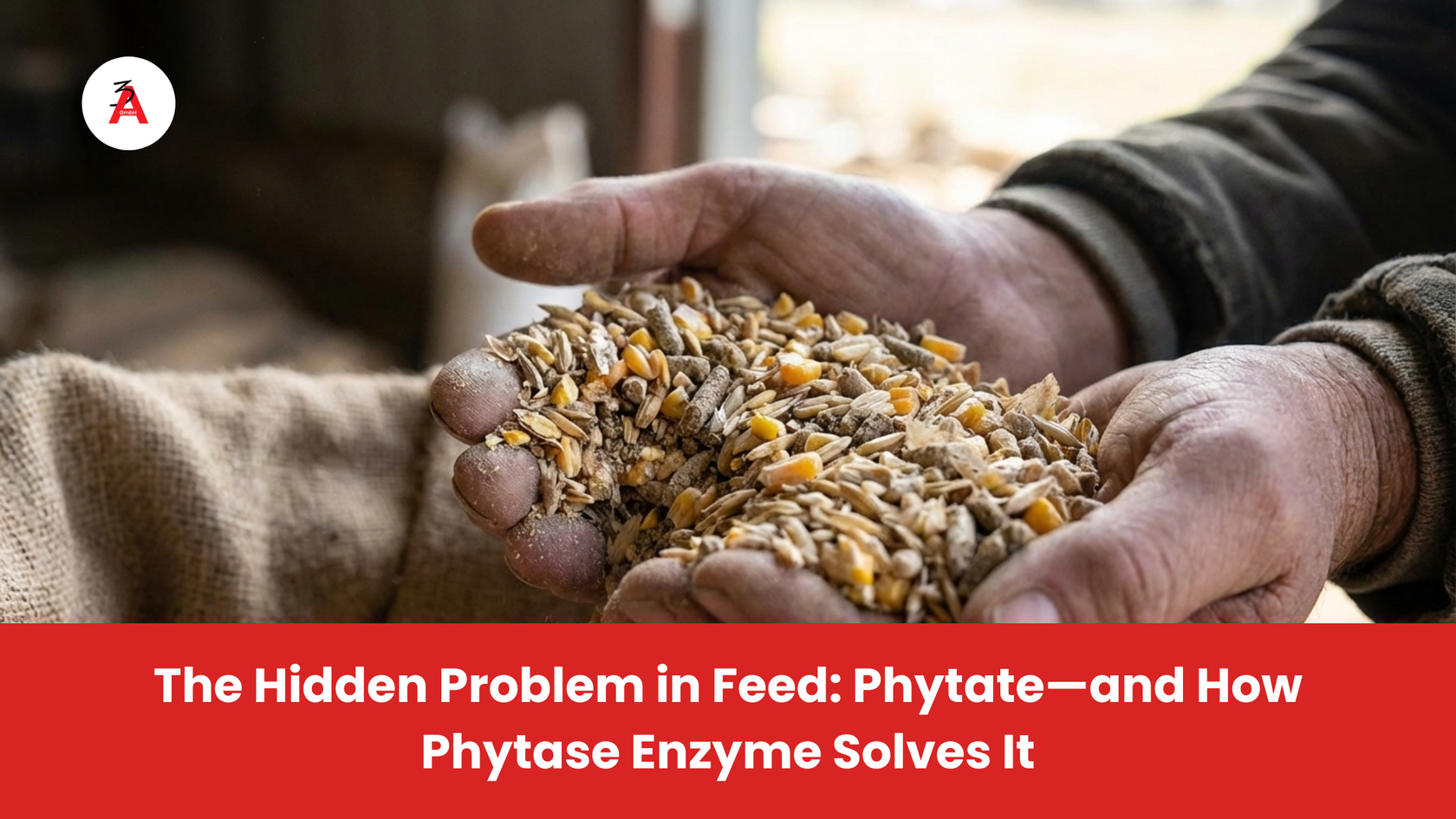
In modern livestock and poultry nutrition, feed efficiency is not just about what nutrients are added—but also about what nutrients remain unavailable. One of the most overlooked challenges in animal feed is phytate, a naturally occurring compound that silently reduces nutrient absorption and increases feeding costs. At Agrovet Animal Health Austria, We believe that understanding this hidden problem—and its solution—is key to sustainable, profitable animal production.
The answer lies in a scientifically proven solution: the Phytase Enzyme.
The answer lies in a scientifically proven solution: the Phytase Enzyme.
What Is Phytate and Why Is It a Problem?
Phytate (or phytic acid) is the primary storage form of phosphorus in plant-based feed ingredients such as maize, wheat, soybean meal, and other cereals. While phosphorus is essential for animal growth, bone development, and metabolic processes, phytate binds this phosphorus tightly—making it unavailable for absorption.
Monogastric animals like poultry and swine lack sufficient natural enzymes to break down phytate. As a result:
- Up to 70% of phosphorus in feed remains unused
- Animals require additional inorganic phosphorus supplementation
- Feed costs increase
- Excess phosphorus is excreted, contributing to environmental pollution
This hidden inefficiency impacts both farm profitability and sustainability.
Phytate does not just trap phosphorus. It also binds to other essential nutrients, including:
- Calcium
- Zinc
- Iron
- Magnesium
- Amino acids
- Energy sources
This binding action reduces overall feed digestibility and negatively affects growth performance, bone strength, and immune response. Even high-quality feed formulations may underperform if phytate remains unaddressed.
How the Phytase Enzyme Unlocks Feed Potential?
The Phytase Enzyme works by breaking down phytate molecules, releasing bound phosphorus and other nutrients so animals can absorb and utilize them efficiently.
At Agrovet Animal Health Austria, We recognize phytase as one of the most impactful feed enzymes in modern nutrition strategies.
Key Benefits of Using Phytase Enzyme in Feed
1. Improved Phosphorus Availability
Phytase releases natural phosphorus from plant ingredients, reducing dependency on costly inorganic phosphorus sources.
2. Better Mineral Absorption
By dismantling phytate complexes, phytase improves calcium and trace mineral utilization—supporting skeletal strength and metabolic health.
3. Enhanced Protein and Energy Utilization
Reduced nutrient binding means better amino acid digestibility and improved feed conversion ratios (FCR).
4. Lower Feed Costs
With better nutrient release, feed formulations can be optimized without compromising performance—delivering direct economic benefits.
Environmental Advantages of Phytase Enzyme Use
Sustainability is no longer optional—it is essential. Excess phosphorus excretion from animal farms contributes to soil and water pollution, particularly eutrophication.
By improving phosphorus utilization, the Phytase Enzyme:
- Reduces phosphorus output in manure
- Minimizes environmental contamination
- Supports compliance with European environmental regulations
At Agrovet Animal Health Austria, We view enzyme-based nutrition as a cornerstone of responsible livestock production.
Phytase Enzyme and Feed Efficiency: A Direct Profit Driver
The economic impact of phytase goes beyond nutrient release. Its effects ripple across the entire production cycle:
- Improved growth rates
- Stronger bone development
- Reduced leg disorders
- Lower mortality
- Consistent flock performance
When feed nutrients are fully utilized, animals grow more efficiently on the same—or even reduced—feed input. This makes the Phytase Enzyme a strategic investment rather than a cost.
Why Phytase Is Essential in Modern Feed Formulation
As global feed prices fluctuate and regulatory pressures increase, feed efficiency has become a competitive advantage. Phytase enables nutritionists to:
- Formulate low-phosphorus diets
- Reduce dependency on mined mineral resources
- Maintain performance under cost constraints
- Align with antibiotic-free and eco-friendly production models
This aligns perfectly with Our commitment at Agrovet Animal Health Austria to promote science-backed, sustainable feed solutions.
The Future of Smart Nutrition Starts with Enzymes
Feed enzymes are no longer optional add-ons—they are essential tools for unlocking feed potential. Among them, the Phytase Enzyme stands out as one of the most powerful contributors to efficiency, sustainability, and profitability.
By addressing the hidden problem of phytate, phytase transforms ordinary feed into high-performance nutrition—without increasing feed quantity or compromising animal health.
Our Commitment to Smarter Feed Solutions
At Agrovet Animal Health Austria, We support progressive farmers and feed manufacturers with advanced nutritional strategies that improve performance while protecting the environment. Enzyme-based feed optimization reflects Our vision of cleaner, more efficient, and future-ready animal nutrition.
Unlocking nutrients already present in feed is not just smart—it is the future of responsible livestock farming.