Ask a farmer why they add molasses to feed and most will give you one word: palatability. They are right. But palatability is only the first of several benefits of molasses for livestock, and on its own it undersells what this old, sticky ingredient is actually doing in the ration.
Molasses is a by-product of sugar refining, rich in rapidly fermentable sugars. In liquid or dry molasses powder form it turns up in cattle, poultry and swine rations for reasons that go well beyond taste. Here is what it does, how it works, and just as importantly, where it stops being the answer.
Molasses is a by-product of sugar refining, rich in rapidly fermentable sugars. In liquid or dry molasses powder form it turns up in cattle, poultry and swine rations for reasons that go well beyond taste. Here is what it does, how it works, and just as importantly, where it stops being the answer.
1. It Gets Animals Eating
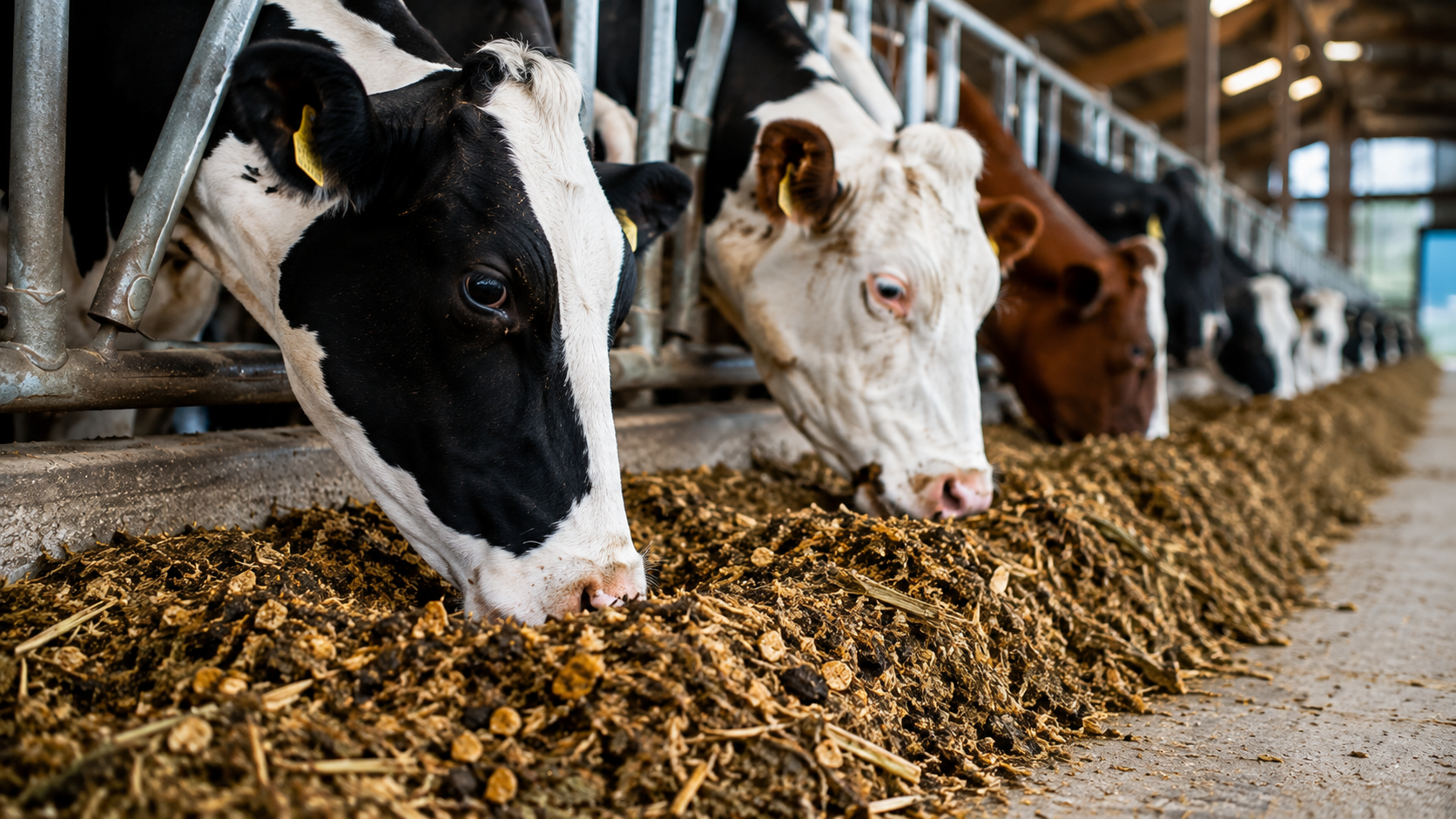
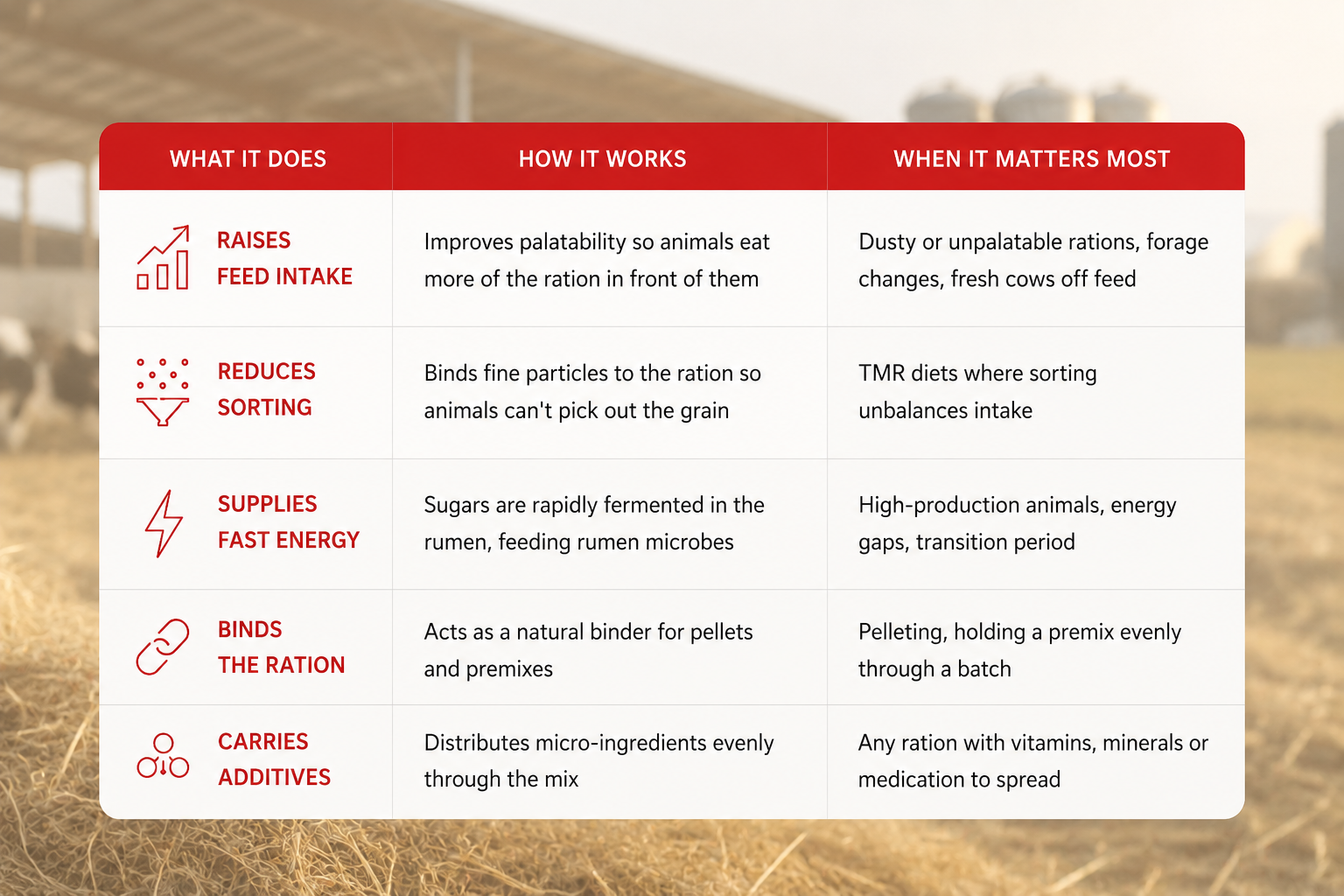
The most visible benefit is intake. Molasses makes a ration taste better, and an animal that likes its feed eats more of it. That sounds simple, but intake is the single biggest lever in animal production: for a dairy cow, one extra kilogram of dry matter intake supports roughly two more kilograms of milk.
This matters most exactly when intake is hardest to hold. A fresh cow off feed after calving, a dusty ration in summer, a forage change that animals are suspicious of, or feed with a bitter additive in it. A small inclusion of molasses can be the difference between a ration animals pick at and one they clean up.
This matters most exactly when intake is hardest to hold. A fresh cow off feed after calving, a dusty ration in summer, a forage change that animals are suspicious of, or feed with a bitter additive in it. A small inclusion of molasses can be the difference between a ration animals pick at and one they clean up.
2. It Stops Animals Sorting Their Feed
On a total mixed ration, animals are expert at sorting: they nose out the tasty grain and leave the long forage behind. The result is that the cow at the front of the group eats a different, richer diet than the one written on paper, and the cow at the back gets what's left.
Molasses works as a natural binder. Its stickiness holds fine particles to the forage so the ration stays mixed as animals eat, and every mouthful is closer to the diet you actually formulated. In dry molasses powder form this binding effect is easy to dose evenly through a batch without the handling mess of liquid.
Molasses works as a natural binder. Its stickiness holds fine particles to the forage so the ration stays mixed as animals eat, and every mouthful is closer to the diet you actually formulated. In dry molasses powder form this binding effect is easy to dose evenly through a batch without the handling mess of liquid.
3. It Feeds the Rumen
The sugars in molasses are rapidly fermentable, which means rumen microbes get to them fast. That gives the rumen a quick pulse of energy and supports the microbial population that does the real work of digesting fibre.
This is why molasses shows up in high-production and transition diets, where the animal is chasing an energy gap. It is not a replacement for the energy in grain or good forage, but as a companion it helps the rumen make better use of everything else in the diet. On dairy units it often sits alongside other steps to support milk production through early lactation.
This is why molasses shows up in high-production and transition diets, where the animal is chasing an energy gap. It is not a replacement for the energy in grain or good forage, but as a companion it helps the rumen make better use of everything else in the diet. On dairy units it often sits alongside other steps to support milk production through early lactation.
4. It Holds a Ration and Its Additives Together
Beyond the animal, molasses does a mechanical job in the feed itself. It is a classic binder for pellets, improving pellet quality and reducing fines. And it acts as a carrier: micro-ingredients like vitamins, minerals and medication cling to it and spread evenly through the mix, instead of separating out or settling to the bottom of the bin.
For anyone making their own feed or premix, this even distribution is quietly one of the most useful benefits of molasses for livestock rations.
For anyone making their own feed or premix, this even distribution is quietly one of the most useful benefits of molasses for livestock rations.
Liquid vs Dry Molasses Powder
Traditional molasses is liquid, and liquid brings handling problems: it needs heated storage in cold weather, specialised pumps, and it is messy to dose accurately on a small scale.
Dried molasses powder solves most of that. The sugars and benefits are carried on a dry carrier, so it stores cleanly, doses precisely, and mixes evenly into a ration or premix with standard equipment. For most feed mills and farms wanting the benefits without the mess, powdered molasses is the more practical format. This powdered molasses works as a straightforward feed intake enhancer across cattle, poultry and swine.
Dried molasses powder solves most of that. The sugars and benefits are carried on a dry carrier, so it stores cleanly, doses precisely, and mixes evenly into a ration or premix with standard equipment. For most feed mills and farms wanting the benefits without the mess, powdered molasses is the more practical format. This powdered molasses works as a straightforward feed intake enhancer across cattle, poultry and swine.
Where Molasses Is NOT the Answer
An honest look at any feed ingredient has to include its limits, and molasses has real ones.
Used within its limits, though, molasses remains one of the most reliable, well-understood tools in the feed shed.
- It is not a full energy source. Molasses complements grain and forage; it does not replace them. Lean on it for energy and you unbalance the ration.
- More is not better. Too much sugar can upset rumen fermentation and loosen manure. Molasses is an inclusion, not a main ingredient, and there is a ceiling on how much a diet should carry.
- It does not fix a broken ration. If intake is poor because of mycotoxins, disease or a badly balanced diet, molasses masks the symptom for a day but does not solve the cause. Find the real problem first.
Used within its limits, though, molasses remains one of the most reliable, well-understood tools in the feed shed.
Conclusion
The benefits of molasses for livestock go a long way past taste. It lifts intake, stops sorting, feeds the rumen, binds pellets and carries additives evenly, all from one inexpensive by-product. In dry powdered form it delivers those benefits with none of the handling headaches of liquid.
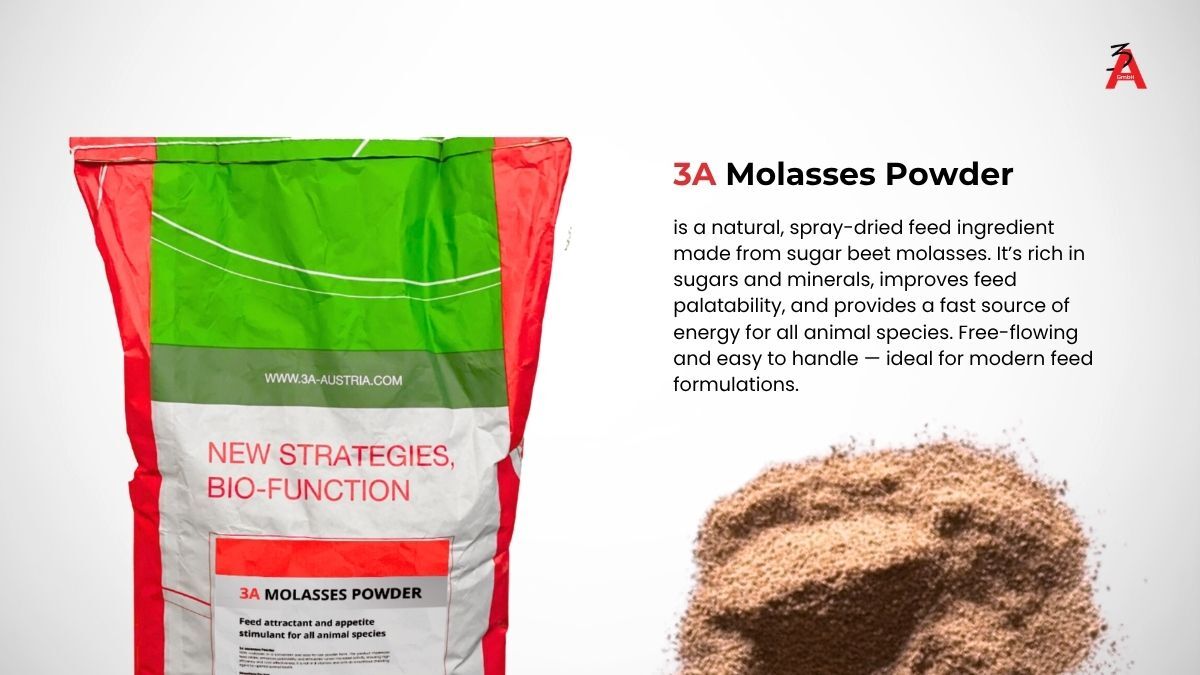
3A Molasses Powder brings these benefits to cattle, poultry and swine rations in a clean, easy-to-dose dry molasses powder that lifts intake and holds a feed together. Sometimes the oldest tool in the feed shed is still one of the smartest.
3A Molasses Powder brings these benefits to cattle, poultry and swine rations in a clean, easy-to-dose dry molasses powder that lifts intake and holds a feed together. Sometimes the oldest tool in the feed shed is still one of the smartest.
FAQs
What are the main benefits of molasses for livestock?
Higher feed intake through better palatability, less sorting of the ration, a source of rapidly fermentable energy for the rumen, and a binding and carrying effect that holds pellets and micro-ingredients together. In dry powdered form these come without the handling problems of liquid molasses.
Is dry molasses powder as good as liquid molasses?
It delivers the same core benefits (palatability, energy, binding) while being far easier to store, dose and mix. For most farms and feed mills, dry molasses powder is the more practical format, especially where liquid handling equipment isn't available.
How much molasses can I add to feed?
Molasses is an inclusion, not a main ingredient. There is a practical ceiling because too much sugar can disturb rumen fermentation and loosen manure. Follow product guidance for your species and class of animal rather than adding it by eye.
Does molasses increase milk production?
Not directly, but by supporting intake and rumen energy it helps a cow reach the production her ration allows. It works as one part of a balanced diet, alongside the other factors that support milk production, not as a standalone booster.
Can molasses be used in poultry and pig feed?
Yes. In dry powdered form it improves palatability and acts as a binder and carrier in poultry and swine rations, not just cattle feed. The inclusion rate is lower and should follow species-specific guidance.