
Main types of poultry feed additives
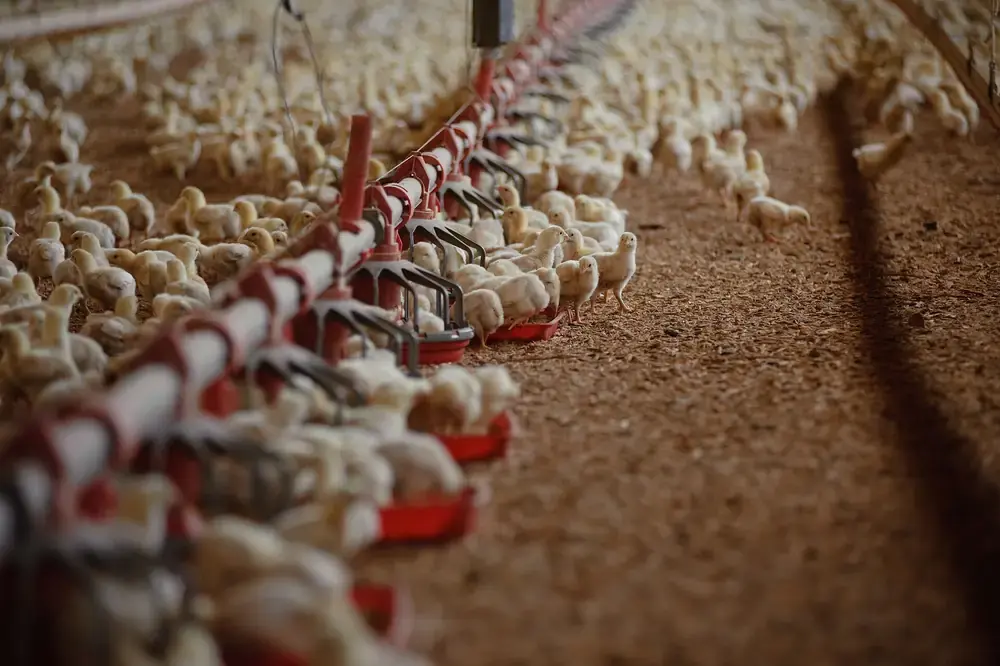

No single product covers every need. The list below is the set of types we use in poultry programmes — a practical map of what we offer and where each type fits, not a complete encyclopaedia of the industry.
Organic acids in feed or water
Organic acids are among the most widely used poultry feed additives for gut support. They can be added to feed or, in some programmes, to drinking water. In water they reach the bird even when feed intake is uneven, which is useful in the first days, during heat, or after a feed change.
Our oral solution for this job is ECOPOL. It is a blend of organic acids with allicin, for use in drinking water and suitable for all avian species. We use it to support the gastrointestinal environment, microbial balance and nutrient utilisation across the flock, without relying on antibiotic growth promoters. It sits alongside veterinary care and a well-designed diet; it does not replace them.
Enzymes, including heat-stable phytase
Birds cannot fully digest every fraction of a plant-based diet. Phytate holds a large share of the phosphorus in grains and oilseeds, and it also binds other minerals. Non-starch polysaccharides in wheat, barley and similar cereals can thicken the gut contents and reduce nutrient contact with the intestinal wall. Feed enzymes are added so that more of what is already in the formula becomes available to the bird.
The enzyme we supply for monogastric diets, including poultry, is 3A Phytase 5,000 (on our product page: 3A Phytase 5,000 TS). It is a 3-phytase, from Aspergillus niger, with a heat-stable coating intended for pelleted feed. According to our catalogue, the inclusion range is 45–180 g per tonne of finished feed, added directly or via a premix. The exact point in that range is set with your nutritionist, based on the phosphorus target and the rest of the diet.
Phytogenic and herbal amino-acid support
Phytogenic, or plant-based, feed additives are used to support feed intake, digestion and consistency of growth, especially in programmes reducing reliance on synthetic growth promoters. Essential oils, herbal blends and plant-derived amino-acid preparations all sit under this heading.
In our range, 3A BioPower is a feed premixture for poultry and swine diets, used to support performance in the finished feed. 3A Herba-Lys is a herbal lysine premixture for poultry and swine, intended as a partial alternative to synthetic lysine HCl. Directions are on the product page; we do not use it as a complete replacement for crystalline lysine.
A related tool is 3A Protein, our premixture for poultry and swine diets, formulated as a partial alternative to synthetic DL-methionine. Methionine is often a limiting amino acid in maize–soybean poultry diets. 3A Protein is there to support methionine supply, not to stand in for a complete amino-acid balance. The labelled ratio is on the product card.
Emulsifiers for fat digestion
Fats and oils carry more than twice the energy of protein or starch on an equal-weight basis, which is why they are used in high-performing poultry diets. Young broilers, however, produce limited bile salts and lipase, so a share of the added fat can pass through unused. An emulsifier supports the breakdown and absorption of that fat, and of fat-soluble vitamins, so more of the formulated energy is actually available.
3A Emulsifier is our lecithin-based powder for this job. In this article we discuss it for poultry; we also supply it for swine and horses, and it is not a cattle product in our programme. In broilers it goes in the finished feed and pairs naturally with a water-based acidifier. First-week fat digestion is covered in our broiler FCR guide.
Mycotoxin binders
Cereals and oilseeds can carry moulds, and moulds can leave mycotoxins in the raw material even when the mould itself is no longer visible. Binders are added to the feed so that a share of those toxins is held in the gut and excreted, rather than absorbed. They are a risk-management tool, not a reason to ignore grain quality, storage or sampling.
Our binder for poultry, swine and ruminants is 3A Agrotox. It is a blend chosen to adsorb a range of mycotoxins and to support the condition of the digestive tract. Inclusion depends on the contamination risk and should follow the product-page directions, agreed with your nutritionist. Binders do not replace testing of incoming raw materials.
Yeast protein, methionine alternatives and palatability
Protein cost and palatability often sit beside the functional additives above. 3A Promune is a high-protein yeast, from Saccharomyces cerevisiae, for poultry, swine and ruminant diets. We use it as a digestible protein source alongside, or partly in place of, conventional vegetable protein. Amino-acid balance still has to be calculated in the usual way.
3A Molasses Powder is 100% molasses in a free-flowing powder, for all species, including poultry. In poultry feed it supports palatability and handling: it is easier to include than liquid molasses and can help the physical quality of the mix. Palatability and intake are part of how a poultry diet actually works on the farm, so it belongs in this guide.
Feed additives for broilers
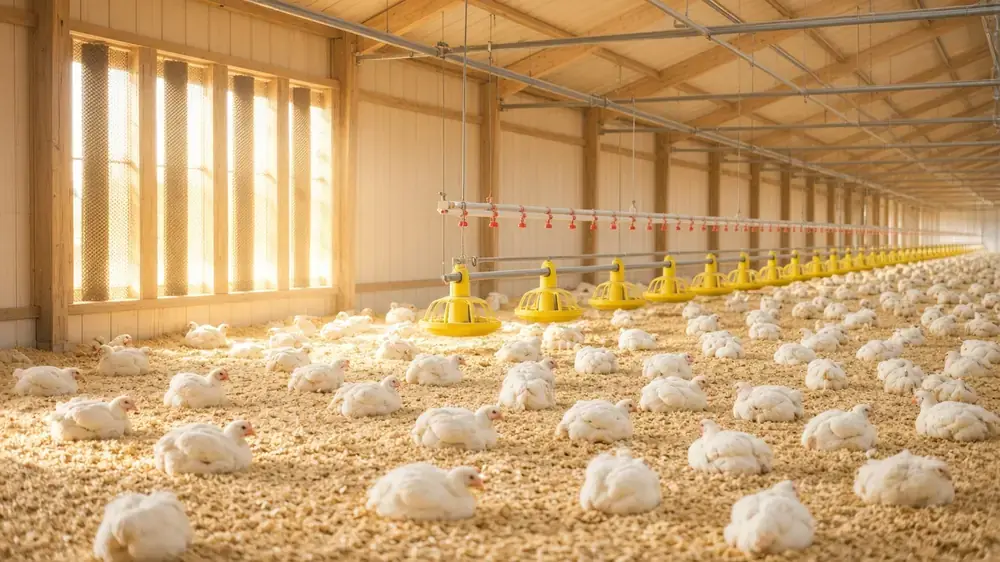
Broiler production is short, and small differences in feed conversion and uniformity show up quickly in cost per kilogram of gain. The additives that matter most in broilers are usually those that support gut condition in the first days, fat digestion in energy-dense starters, and the availability of phosphorus and amino acids across the cycle.
A practical broiler set from our range looks like this. ECOPOL in the drinking water can support the gut environment from day one, including when feed intake is still uneven. 3A Emulsifier in the feed is there for the added fat. 3A Phytase 5,000 belongs in most plant-based broiler formulas, within the catalogue range of 45–180 g per tonne of finished feed. 3A BioPower, 3A Herba-Lys and 3A Protein are used where the programme calls for phytogenic support or a partial alternative to crystalline lysine or DL-methionine. 3A Agrotox is included when mycotoxin risk in the grain is a concern. 3A Promune and 3A Molasses Powder are used where protein formulation or palatability needs support.
If the question you are really asking is “what is a natural growth booster for broilers?”, that is a more specific job than this hub can cover in full. In our work it is usually a combination of gut support in the water and better use of the starter diet, especially fat digestion in week one. We walk through that programme in Improving Broiler FCR: Gut Health, Fat Digestion and the First Week. This page remains the overview; that page is the broiler deep dive.
Feed additives for layers
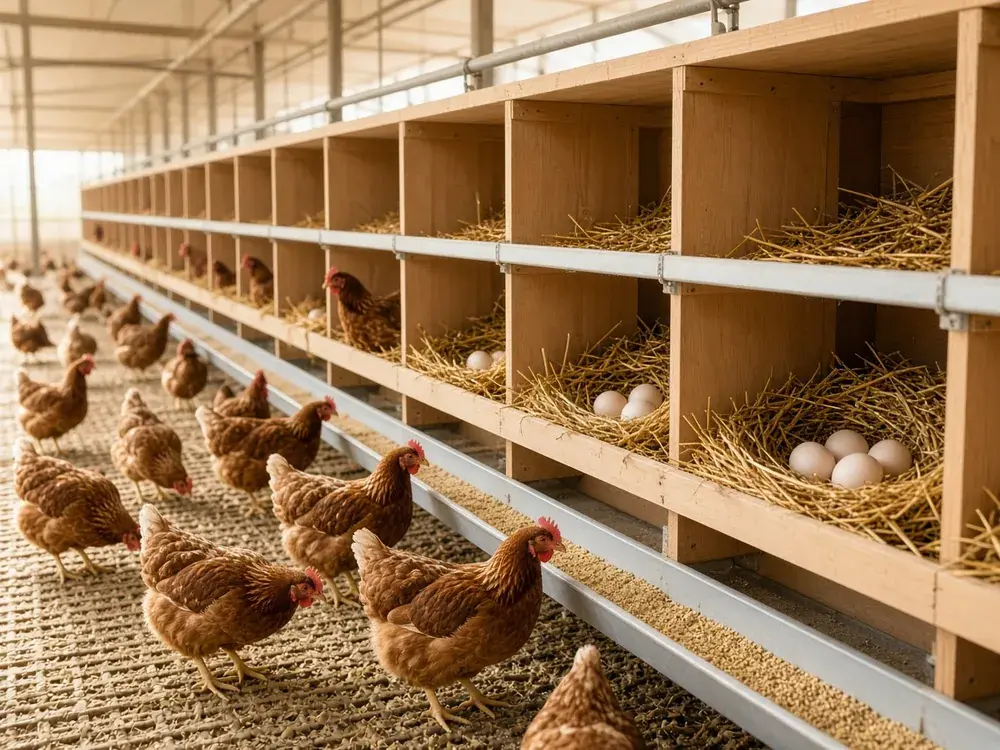
Layers run a much longer cycle than broilers, and the diet has to support persistent lay, egg mass and shell quality, not only growth. Several of the same additive types apply, but the emphasis shifts.
Phytase remains relevant, because layer diets are also built on phytate-rich raw materials and mineral supply matters for shell formation. ECOPOL can be used in the water for all avian species, including laying flocks, when the aim is to support gut condition during stress, house changes or warm periods. 3A Agrotox has the same role as in broilers: mycotoxin risk in the feed. 3A Promune, 3A Herba-Lys and 3A Protein can support the protein and amino-acid side of the formula where a partial alternative to soybean meal, crystalline lysine or DL-methionine is useful. 3A Molasses Powder can support palatability when intake needs a lift. 3A Emulsifier is primarily a broiler tool in our programme, where high levels of added fat meet a still-immature digestive system; we would not automatically put it into a layer formula without a specific reason.
This is not a complete laying-hen manual. The point is simpler: a poultry feed-additive programme should name the bird type. A broiler starter and a layer peak diet are not the same job, even when some of the products overlap.
How to choose feed additives for poultry
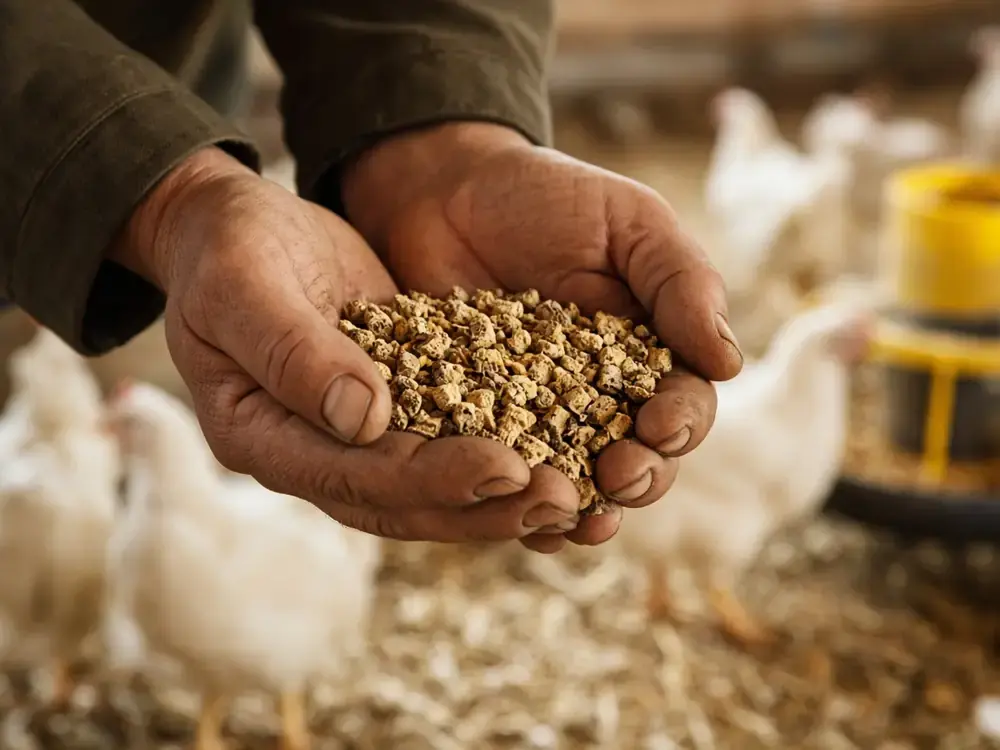
Start with the problem, not with the product catalogue. The useful questions are practical:
- What should improve: FCR, uniformity, intake, phosphorus use, amino-acid cost, mycotoxin risk, or gut condition during a known stress period?
- Is the flock a broiler cycle or a laying flock, and which phase is it in?
- Should the additive go into the feed, the premixture, or the drinking water?
- If the feed is pelleted, can the additive — especially an enzyme — stand the conditioning temperature?
- How will you judge the result on your own farm, over more than one flock?
Quality and consistency matter as much as the type. Two products can sit in the same category and still behave differently in the pellet press, the drinker line, or a wheat-based versus a maize-based diet. Ask for a clear inclusion rate, a method of application, and a way to check that the product is actually in the finished feed or water. Not all additives deliver the same results.
To review the poultry side of our range, start with our poultry products and the cards linked above. To talk through a programme for your farm or feed mill, write to us at office@3a-austria.eu.
Task, additive type and our products
| Task | Additive type | Our product |
|---|---|---|
| Support the gut environment in all avian species, via drinking water | Organic acids (oral solution) | ECOPOL |
| Support growth and feed utilisation in poultry diets | Herbal / botanical blend in feed | 3A BioPower |
| Unlock phytate-bound phosphorus in poultry feed | Heat-stable phytase (45–180 g/t finished feed) | 3A Phytase 5,000 |
| Support lysine supply in poultry diets | Herbal lysine, as a partial alternative to synthetic lysine HCl | 3A Herba-Lys |
| Support methionine supply in poultry diets | Partial alternative to synthetic DL-methionine | 3A Protein |
| Support fat digestion in broilers | Emulsifier | 3A Emulsifier |
| Support protein supply in the diet | High-protein yeast | 3A Promune |
| Bind mycotoxins in poultry diets | Mycotoxin binder | 3A Agrotox |
| Support palatability and handling of feed | Molasses powder | 3A Molasses Powder |
Inclusion rates, except the catalogue range for 3A Phytase 5,000, should be taken from the product page and agreed with your nutritionist. This table does not include on-farm trial figures.
 ECOPOLOrganic acids (oral solution)
 3A BioPowerHerbal / botanical blend in feed
 3A Phytase 5,000Heat-stable phytase (45–180 g/t finished feed)
 3A Herba-LysHerbal lysine, as a partial alternative to synthetic lysine HCl
 3A ProteinPartial alternative to synthetic DL-methionine
 3A EmulsifierEmulsifier
 3A PromuneHigh-protein yeast
 3A AgrotoxMycotoxin binder
 3A Molasses PowderMolasses powder