Photo: USDA / Preston Keres, public domain (Wikimedia Commons).
Short answer: Natural alternatives to antibiotics in animal feed are not a swap of one product for another. Cutting antibiotic use works when a farm reduces the reasons animals need medicine in the first place: hygiene, water, biosecurity, good management and a close working relationship with the vet. Nutrition is one part of that system. Feed and water additives such as acidifier blends, plant extracts, enzymes and yeast cell walls can support gut health and performance as part of the programme. When an animal is sick, the vet decides what medicine it needs.
Why are farms under pressure to use fewer antibiotics?
Because the rules and the numbers both point that way. In the EU, the use of antibiotics as growth promoters in feed ended on 1 January 2006, when the last four permitted substances were removed from the register of feed additives (European Commission, IP/05/1687).
Since 28 January 2022, the EU regulation on veterinary medicines, Regulation (EU) 2019/6, has gone further. According to the European Commission, it bans the prophylactic use of antimicrobials in groups of animals, restricts metaphylactic use, and bans antimicrobials for promoting growth or increasing yield. The same page sets out the EU's aspirational target of halving overall sales of antimicrobials for farmed animals and aquaculture by 2030. The Commission also notes that operators outside the EU who export animals or animal products to the EU must respect the ban on antimicrobials for growth promotion or yield increase, which matters for producers in Asia and elsewhere who sell into Europe.
The monitoring data show that the job is not finished. The European Medicines Agency's second ESUAvet report, published on 9 December 2025, found that sales of antimicrobial veterinary medicines for food-producing animals in 2024 were 5% higher than in 2023. EMA says this suggests the declining trend seen between 2010 and 2022 may be slowing down or reversing, and that more data are needed to tell whether this is lasting (EMA, 9 December 2025). The full report puts aggregated EU sales at 46.1 mg per kg of animal biomass, with national figures ranging from 1.8 to 112.9 mg/kg.
That spread is the interesting part. Countries with comparable livestock sectors report very different figures, which suggests that farm systems and everyday practice matter a great deal.
What have Spain and France done?
Two of Europe's largest livestock producers show what a structured national approach can look like.
Spain: the REDUCE programmes. In September 2016, Spain's national antibiotic resistance plan (PRAN) and the pig sector signed a voluntary agreement to cut the use of colistin, an antibiotic from the group that EMA classes as category B ("restrict"). According to PRAN, more than 230 companies joined, and colistin use in the pig sector fell from 51 to 0.5 mg/PCU (milligrams per population correction unit), a reduction of almost 100%. Similar REDUCE agreements followed for beef and dairy cattle, rabbits, sheep and goats, and broilers. The broiler agreement set targets of a 45% cut in total antibiotic use and an 80% cut in colistin use.
France: the Écoantibio plans. France's agriculture ministry reports that Écoantibio 1 (2011–2017) and Écoantibio 2 (2017–2022) reduced overall exposure of animals to antibiotics by 52% between 2011 and 2022 (Ministère de l'Agriculture, updated 4 February 2026). The current plan, Écoantibio 3 (2023–2028), has 25 actions in five areas. Its aims include keeping exposure of farm animals at current levels, reducing the diseases that lead to antimicrobial use, and putting the relationship between vet and animal keeper at the centre of good medicine use.
The common thread is not a product. It is sector agreements, data, and farm-level changes in how animals are kept.
What should a farm do first?
Before any additive, look at the basics that decide how often animals get sick:
- Biosecurity. Control who and what enters the farm: people, vehicles, new animals, feed deliveries and equipment.
- Hygiene and downtime. Proper cleaning and disinfection between batches, and enough empty time for it to work.
- Water. Clean lines, the right flow and temperature, and regular checks of water quality at the drinker, not just at the source.
- Environment. Temperature, ventilation, litter and stocking density matched to the age of the animals.
- Young-animal management. Brooding in poultry, colostrum in calves, and a smooth weaning in piglets.
- The vet. A herd or flock health plan agreed with your vet, with medicine records you actually review.
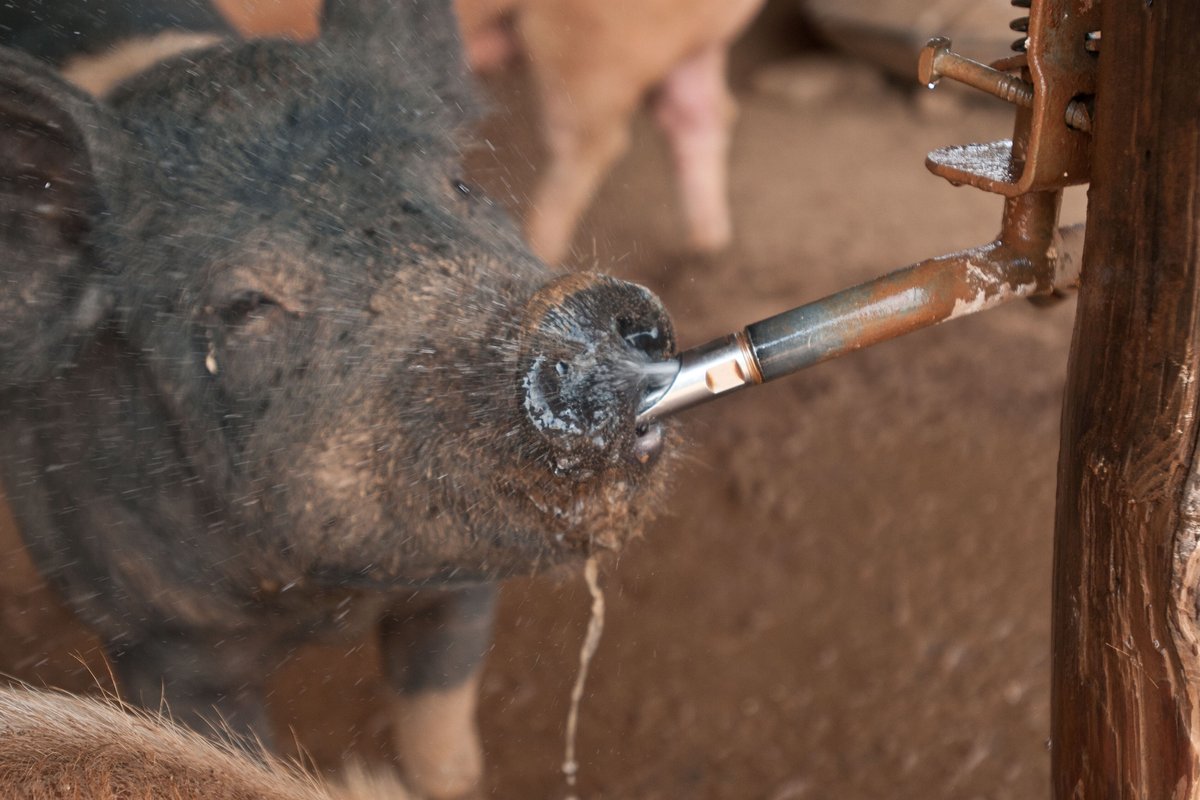
Photo: USDA, public domain (Wikimedia Commons).
Where does nutrition fit?
Photo: European Commission, Audiovisual Service / Lukasz Kobus, CC BY 4.0 (Wikimedia Commons).
Nutrition works on the conditions in the gut. A stable gut digests feed better, leaves less undigested material for unwanted microbes and copes better with stress. The main tools:
- Feed quality and digestibility. Raw material quality, particle size and a diet matched to the age of the animal.
- Enzymes. Phytase releases phosphorus and other nutrients bound in phytate; beta-mannanase breaks down beta-mannans found in many feed ingredients.
- Acidifiers. Blends of acids in water or feed that lower pH in the upper digestive tract.
- Plant extracts and essential oils. Compounds from garlic, thyme, rosemary or oregano, used in many feed and water products.
- Yeast cell walls and clays. Used in premixes as functional carriers and to support gut conditions.
Our 3A products combine these elements. Ecopol is our drinking-water solution for poultry: an acidifier blend (citric, lactic, formic and propionic acids) with allicin from garlic. It supports intestinal health and a balanced gut microbiota. We recommend 1 L per 1,000 L of drinking water throughout the growing period, or 5 L per 1,000 L for 7 days.
3A BioPower is our premix for poultry and swine diets. It contains rosemary and thyme oils, phytase, beta-mannanase, bentonite clay and yeast cell walls, and we recommend 1 kg per tonne of feed. 3A BioPower is intended to support performance, digestion and feed efficiency, with the herbal blend supporting gut microbiota and antioxidant activity.
Neither product is a medicine, and neither is a reason to delay a vet visit. Their place is in the daily routine of a farm that is already working on the basics.
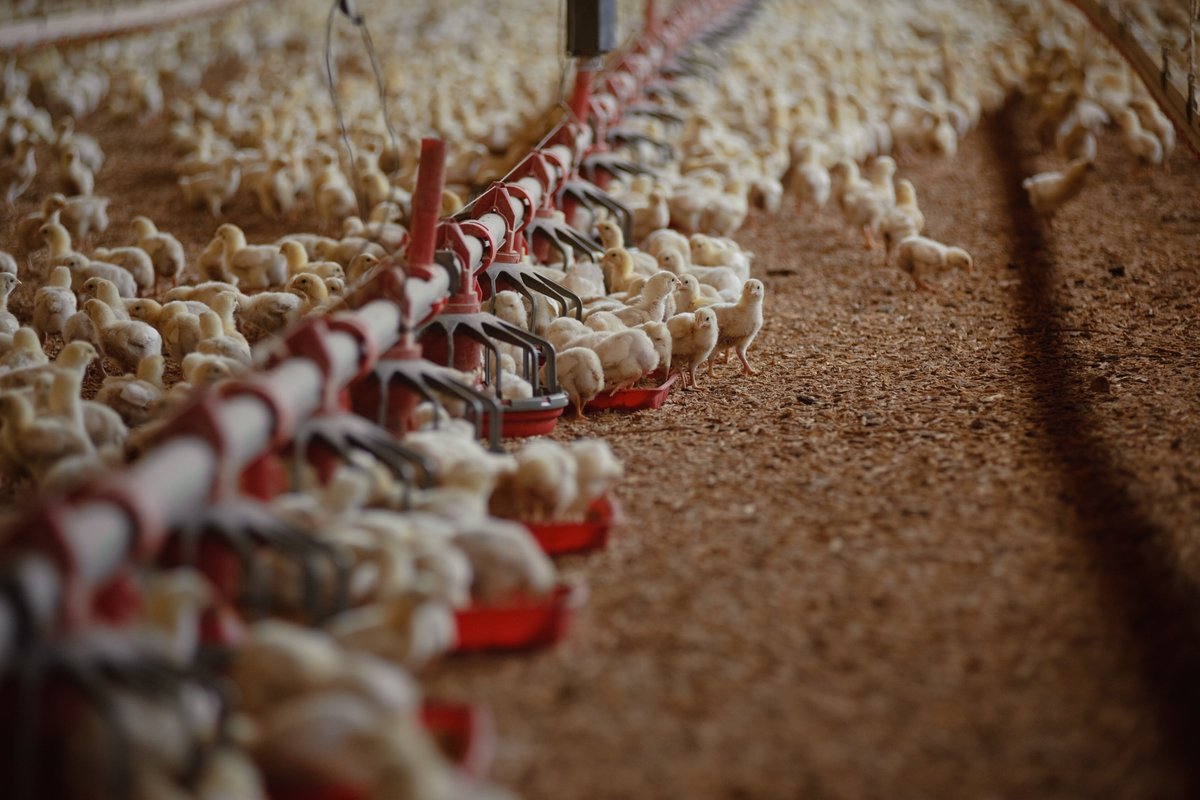
Photo: USDA NRCS Texas, public domain (Wikimedia Commons).
How do you read the label of a natural feed additive?
The words on the bag tell you a lot about the product and the supplier:
- Product category. In the EU, additives for use in animal nutrition are governed by Regulation (EC) No 1831/2003. A feed product is not a veterinary medicine, and it should not be sold as one.
- Claims. Look for "supports" or "helps maintain". A feed product that makes medicinal claims about a disease is a warning sign.
- Composition. Ingredients named in full, not just "herbal blend".
- Dose and route. Feed or water, per tonne or per 1,000 L, and for how long.
- Manufacturer quality system. Ask which certification the plant holds. We, Agrovet Animal Health GmbH, are a GMP+ certified manufacturer.
- Data. Ask what the supplier's figures are based on and under what conditions, so you know what you are comparing.
How do you measure progress on your own farm?
Run any change as a planned comparison and track the same indicators batch after batch:
Two or three batches in matched houses give a more reliable picture than one good result. For broilers, our article on improving broiler FCR in the first week gives a ready-made checklist. For cattle, our article on nutritional support for cattle during foot-and-mouth disease shows how the same principles apply when an outbreak is under official control.
FAQ
Can natural feed additives take the place of antibiotics?
Not when an animal is sick: then the vet decides which medicine is needed. Natural feed and water additives support gut health and performance as part of a programme that reduces how often antibiotics are needed.
What are the most common natural antibiotic alternatives for animal nutrition?
Acidifiers, plant extracts and essential oils, enzymes such as phytase and beta-mannanase, and yeast-based ingredients. Most programmes combine several of these with management changes.
Do 3A BioPower and Ecopol contain antibiotics?
No. 3A BioPower contains plant oils, enzymes, clay and yeast cell walls, and Ecopol contains water, an acidifier blend and allicin.
When is World AMR Awareness Week 2026?
From 18 to 24 November 2026, according to the WHO campaign page. It is a good moment to review your farm's antibiotic records with your vet.
The bottom line
The farms and countries that have cut antibiotic use did it with data, sector agreements and better management, not with a single product. Nutrition earns its place by keeping the gut stable so that fewer animals need antibiotics. Start with biosecurity, water and young-animal management, add feed and water additives as part of the programme, and measure every change.
For advice on Ecopol or 3A BioPower in your programme, contact us at office@3a-austria.eu or +43 664 205 8093.