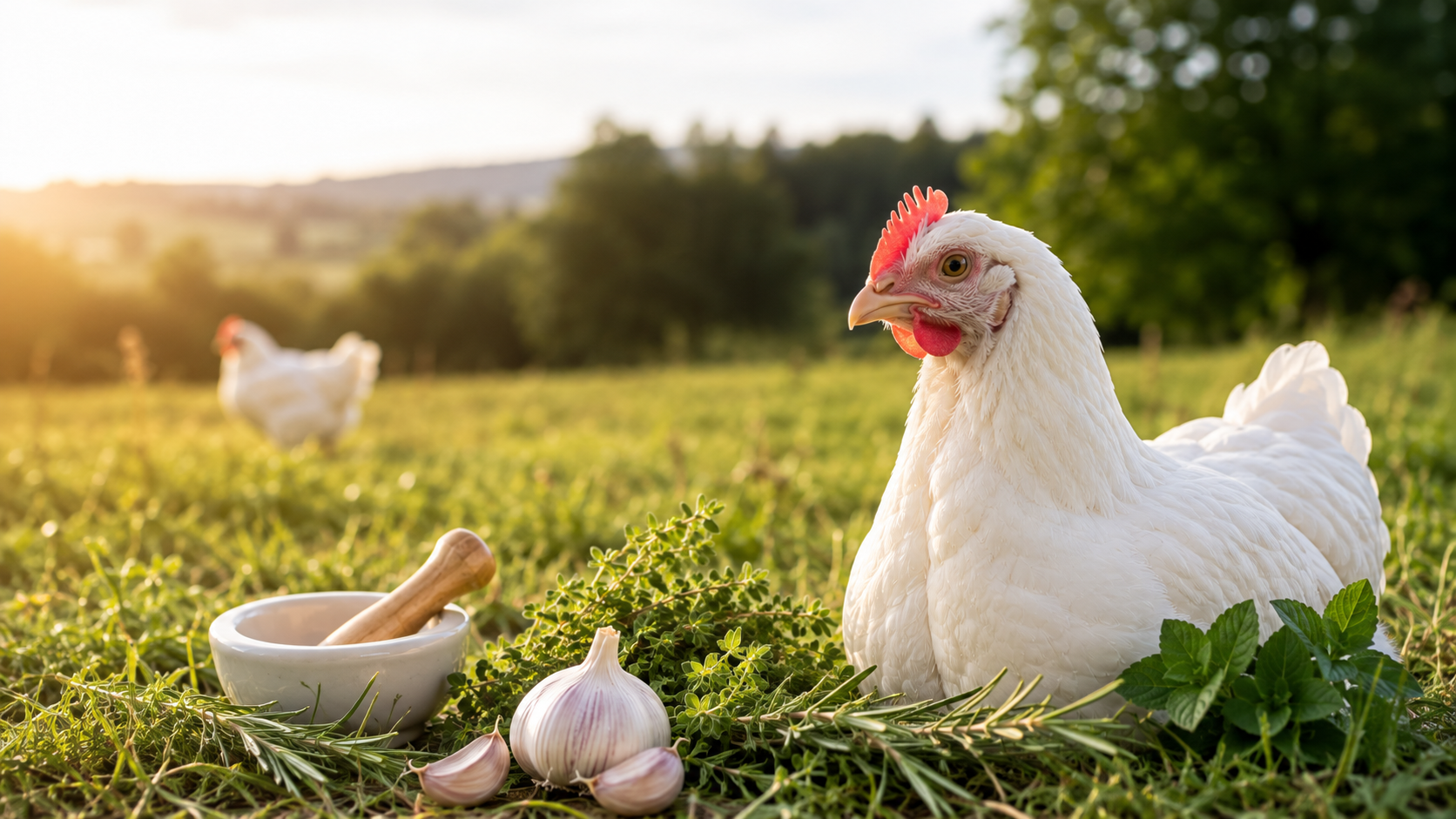
Learning how to reduce antibiotics in poultry is not really about removing something. It is about giving the bird everything it needs so that the antibiotic was never the thing holding performance together in the first place.
For decades, routine antibiotics did quiet work in the background: covering for gut challenges, smoothing over stress, propping up growth. As that routine use falls away under pressure from regulators and buyers, the job those antibiotics were doing does not disappear. It has to be done another way, and that way starts in the gut.
For decades, routine antibiotics did quiet work in the background: covering for gut challenges, smoothing over stress, propping up growth. As that routine use falls away under pressure from regulators and buyers, the job those antibiotics were doing does not disappear. It has to be done another way, and that way starts in the gut.
Why Gut Health Is the Whole Game
Around 70% of a bird's immune activity sits in and around the gut. That makes the gut wall the single most important barrier a bird has: when it is intact and the microflora is balanced, pathogens struggle to get a foothold, nutrients are absorbed properly, and the bird holds its growth on its own. When that barrier is compromised, everything downstream suffers, from feed conversion to flock uniformity to mortality.
This is why the search for natural alternatives to antibiotics keeps coming back to the same target. You are not looking for a single product that 'replaces' an antibiotic. You are looking for tools that keep the gut environment hostile to pathogens and friendly to the bird. Two of the most effective are organic acids and allicin.
This is why the search for natural alternatives to antibiotics keeps coming back to the same target. You are not looking for a single product that 'replaces' an antibiotic. You are looking for tools that keep the gut environment hostile to pathogens and friendly to the bird. Two of the most effective are organic acids and allicin.
Tool One: Organic Acids
Bacteria are fussy about pH. Many of the pathogens that cause problems in poultry, such as Salmonella and E. coli, are sensitive to acidic conditions. Organic acids use this against them.
Added to drinking water, organic acids lower the pH of the water itself and of the upper digestive tract. That creates an environment acid-sensitive pathogens struggle to multiply in, while the beneficial lactobacilli that a healthy gut depends on tolerate it well. The result is a microbial balance tipped in the bird's favour, and cleaner drinking water on the way in, which matters because the water line is one of the most overlooked routes of infection on a poultry unit.
Added to drinking water, organic acids lower the pH of the water itself and of the upper digestive tract. That creates an environment acid-sensitive pathogens struggle to multiply in, while the beneficial lactobacilli that a healthy gut depends on tolerate it well. The result is a microbial balance tipped in the bird's favour, and cleaner drinking water on the way in, which matters because the water line is one of the most overlooked routes of infection on a poultry unit.
Tool Two: Allicin
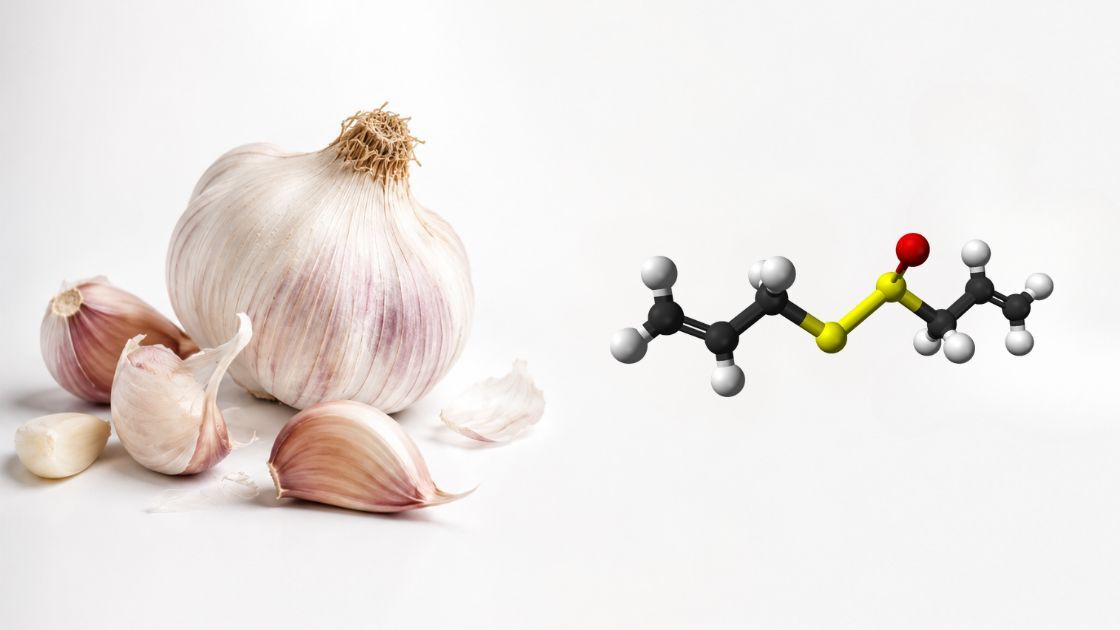
Allicin is the compound that gives crushed garlic its sharp smell, and it has been studied for a long time for a reason: it carries broad natural antimicrobial activity. In poultry it acts as a plant-based line of defence, helping to keep the gut microflora balanced and supporting the integrity of the gut wall.
Used alongside organic acids, allicin adds a second, different mode of action. That combination matters: leaning on any single tool invites bacteria to adapt around it, while pairing an acid effect with a plant-based antimicrobial gives pathogens two problems to solve at once, and keeps the bird's own gut defences better supported without reaching for antibiotics.
Used alongside organic acids, allicin adds a second, different mode of action. That combination matters: leaning on any single tool invites bacteria to adapt around it, while pairing an acid effect with a plant-based antimicrobial gives pathogens two problems to solve at once, and keeps the bird's own gut defences better supported without reaching for antibiotics.
Why Deliver It Through the Water
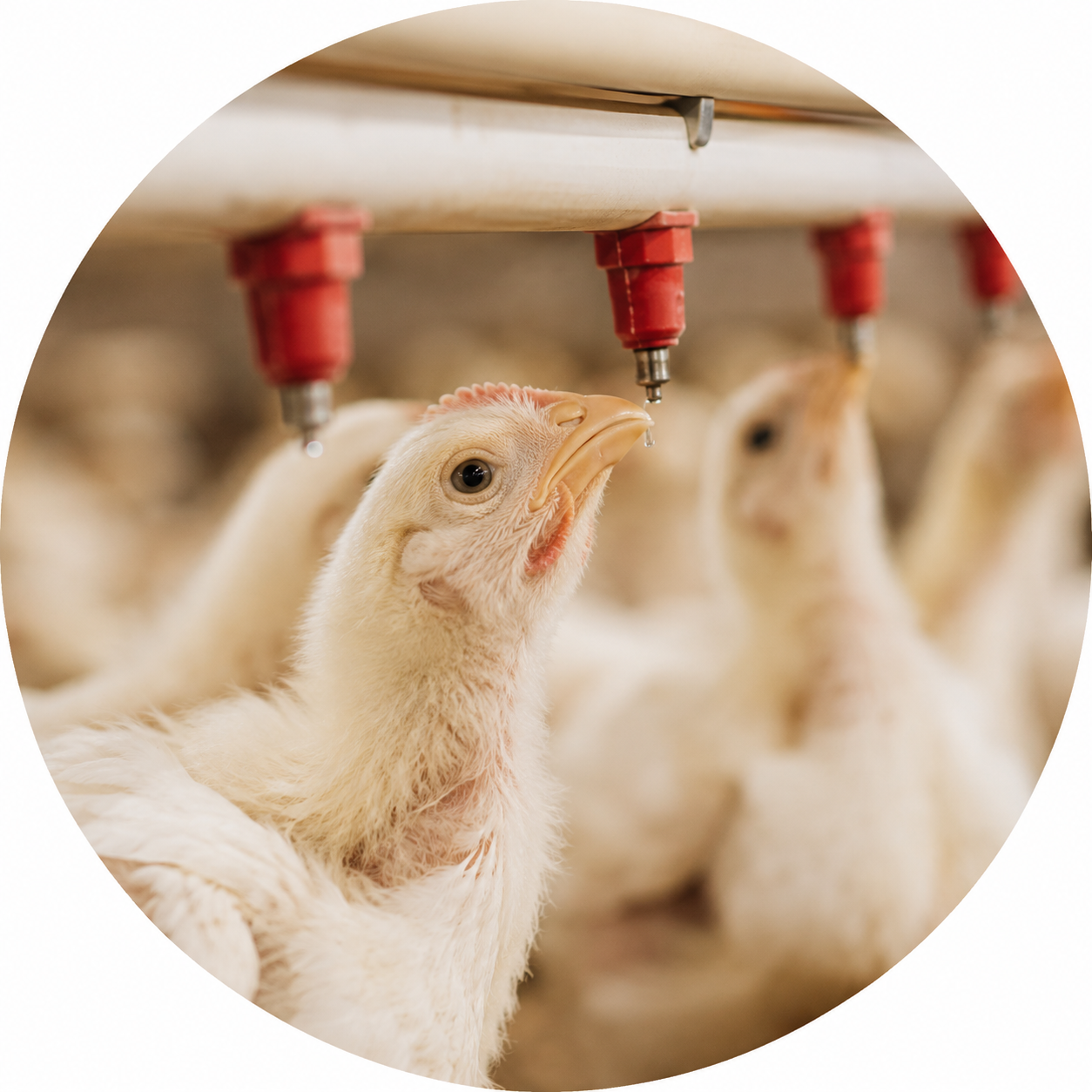
Here is a detail that gets missed. When birds get sick or stressed, the first thing they do is go off feed. But they keep drinking. A medicated or supplemented feed cannot help a bird that has stopped eating; water can.
Delivering support through the drinking water means it reaches every bird in the flock, quickly, at the exact moment intake is falling and the challenge is highest. It is fast to apply across a whole house, doses evenly, and does not depend on birds eating a set amount of feed. For a support product aimed at gut health and pathogen pressure, water is not a compromise route. It is often the smarter one.
Delivering support through the drinking water means it reaches every bird in the flock, quickly, at the exact moment intake is falling and the challenge is highest. It is fast to apply across a whole house, doses evenly, and does not depend on birds eating a set amount of feed. For a support product aimed at gut health and pathogen pressure, water is not a compromise route. It is often the smarter one.
How the Pieces Fit
Where Ecopol Fits
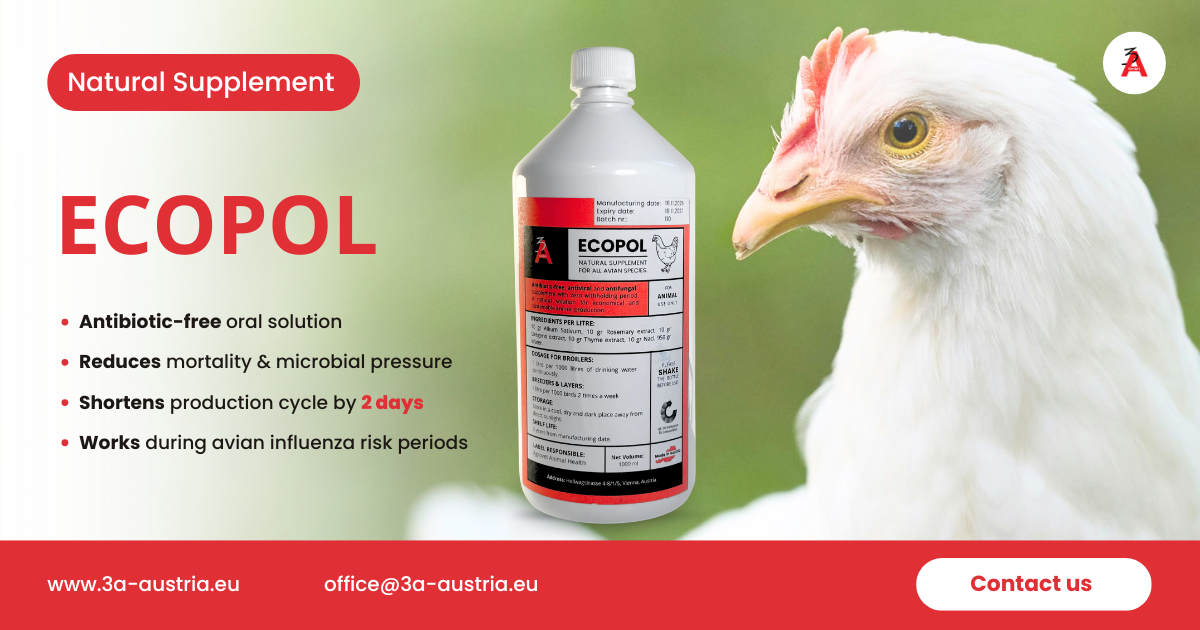
Ecopol is Agrovet's water-soluble solution for poultry, combining organic acids and allicin in a single product delivered through the drinking water. It is built to do exactly what this article describes: support a balanced gut microflora, help keep the water line and upper gut hostile to pathogens, and support the bird's own resilience through the stress and challenge periods where antibiotics were once the default reach.
Used as part of a complete programme, it gives producers a practical, plant-and-acid-based tool for lowering reliance on routine antibiotics, without asking the flock to give up performance to get there.
Used as part of a complete programme, it gives producers a practical, plant-and-acid-based tool for lowering reliance on routine antibiotics, without asking the flock to give up performance to get there.
What This Approach Cannot Do
An honest account has to be clear about the limits, because natural gut support is one part of antibiotic-free production, not the whole of it.
Within those limits, though, keeping the gut healthy is the foundation the entire antibiotic-free approach is built on, and it is the part a producer has the most direct control over every single day.
- It does not replace biosecurity. Clean housing, controlled movement and good hygiene do more to keep disease out than any additive can. Gut support works with biosecurity, not instead of it.
- It does not replace vaccination or veterinary care. Where a flock faces a specific disease, vaccination and a vet's diagnosis lead. When a bacterial infection genuinely needs antibiotics, it needs them, and this approach sits alongside that, not in place of it.
- It is support, not a cure. Organic acids and allicin support gut health and a balanced microflora. They are not a treatment for any specific disease, and should not be described as one.
Within those limits, though, keeping the gut healthy is the foundation the entire antibiotic-free approach is built on, and it is the part a producer has the most direct control over every single day.
Conclusion
Knowing how to reduce antibiotics in poultry is not about finding one product to swap in. It is about getting the gut environment right so the bird performs without them. Organic acids tilt the balance against pathogens, allicin adds a natural antimicrobial layer, and delivering both through the water gets them to every bird exactly when it counts.
Ecopol brings those tools together in a single water-soluble solution for poultry. Paired with solid biosecurity and good management, it is a practical way to build the antibiotic-free flock that buyers increasingly ask for, on a foundation of gut health rather than routine medication.
Ecopol brings those tools together in a single water-soluble solution for poultry. Paired with solid biosecurity and good management, it is a practical way to build the antibiotic-free flock that buyers increasingly ask for, on a foundation of gut health rather than routine medication.
FAQs
What are the best natural alternatives to antibiotics in poultry?
There is no single replacement. The most effective approach combines gut-health tools such as organic acids and allicin with strong biosecurity, good management and vaccination where needed. Organic acids suppress acid-sensitive pathogens and support beneficial bacteria, while allicin adds a plant-based antimicrobial effect.
How do organic acids work in poultry drinking water?
They lower the pH of the water and the upper digestive tract, creating conditions that pathogens like Salmonella and E. coli struggle to multiply in, while beneficial lactobacilli tolerate them. They also help keep the drinking water line cleaner, which is a common route of infection.
What is allicin and is it safe for poultry?
Allicin is a natural compound from garlic with broad antimicrobial activity. Used at appropriate inclusion levels as a feed or water supplement, it supports a balanced gut microflora and gut integrity as part of a normal poultry programme.
Can I raise antibiotic-free poultry with supplements alone?
No. Gut-health support is one essential part, but antibiotic-free production also depends on biosecurity, hygiene, vaccination and good husbandry. Supplements like organic acids and allicin support the system; they do not carry it on their own.
Why deliver support through water instead of feed?
Because sick or stressed birds go off feed but keep drinking. Water delivery reaches every bird quickly, doses evenly across the house, and works at the exact moment feed intake is dropping, which is often when support is needed most.
How does Ecopol support antibiotic-free poultry?
Ecopol combines organic acids and allicin in a water-soluble solution for poultry. It supports a balanced gut microflora, helps keep the water line and upper gut hostile to pathogens, and supports the bird's own resilience, helping producers lower reliance on routine antibiotics as part of a complete programme.