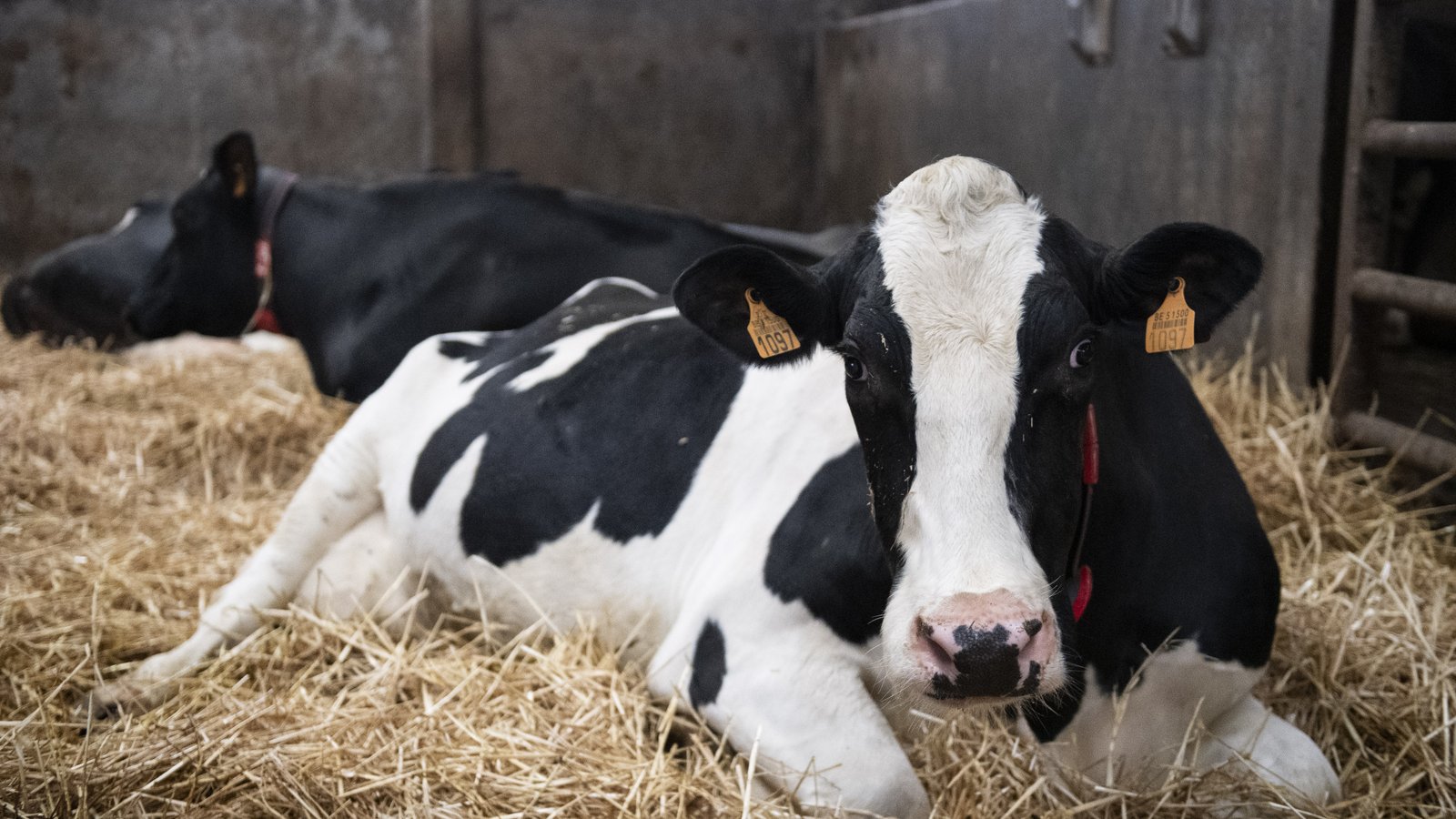
Photo: European Commission, Audiovisual Service / Lukasz Kobus, CC BY 4.0 (Wikimedia Commons).
Short answer: Good udder health rests on four habits: a clean, consistent milking routine, dry bedding, sound nutrition in the dry period and early lactation, and monthly somatic cell count (SCC) checks that show which cows need attention. Supplements can support immune function and milk yield as part of that programme, but they do not stand in for hygiene, monitoring or the vet. Under EU hygiene rules, raw cow's milk must stay at or below 400,000 somatic cells per ml as a three-month rolling average.
If you are working on how to increase milk production in cows naturally, start here: milk you do not lose to udder problems is the cheapest milk you will get.
What does the somatic cell count tell you?
Somatic cells are mainly white blood cells, plus some cells from the udder itself. A healthy quarter always has a few. When bacteria get into the udder, the count rises sharply as white blood cells move in.
According to FAO guidance on mastitis control, mastitis is an inflammation of the udder, usually caused by bacteria, and most of it runs as a subclinical infection the milker does not see. The cell count is often the only sign.
Three reference points:
- 400,000 cells/ml is the EU criterion for raw cow's milk, calculated as a rolling geometric average over three months with at least one sample per month. If milk does not meet it, the food business operator must inform the competent authority and take measures to correct the situation.
- 200,000 cells/ml is a widely used individual-cow threshold in dairy industry guidance: above it, a cow is more likely to have an udder infection.
- Your own trend. SCC is naturally higher in older cows, right after calving and towards the end of lactation, and udder injury, stress and other illness also push it up. A count that stays high month after month matters more than one high reading.
Two somatic cell count reference points
Somatic cells per ml of milk. Two different measures: a single cow's test result and the three-month rolling geometric average of raw milk.
Above 200,000 cells/ml a cow is more likely to have an udder infection; this is an industry threshold, not an EU rule. 400,000 cells/ml is the EU criterion for raw cow's milk under Regulation (EC) No 853/2004. Your own monthly trend matters more than a single reading.
In its 2023 scientific opinion on the welfare of dairy cows, the European Food Safety Authority recommends monitoring udder health with two measures together: the rate of clinical mastitis cases and individual cow SCC, measured monthly, or daily with automatic milking systems.
As SCC rises, milk yield is likely to fall, and mastitis changes milk composition, keeping quality, taste and how well milk makes cheese or yoghurt.
How do the milking routine and bedding affect udder health?
Most udder infections start at the teat end. The healthy teat duct is the cow's most important natural defence, and the main routes of exposure are the milking itself and dirty, wet bedding between milkings.

Photo: USDA, public domain (Wikimedia Commons).
At milking:
- Check foremilk every time. A strip cup shows clots, flakes or watery milk early and helps detect clinical mastitis.
- Dip or spray teats right after milking. Post-milking teat disinfection is considered the most effective way to reduce exposure to the contagious bacteria that spread from cow to cow during milking.
- Look after teat skin. Sores and chapped skin let bacteria multiply on the teat.
- Maintain the machine. Slipping liners and vacuum fluctuations can push milk back towards the teat end and carry bacteria with it.
Between milkings:
- Keep bedding dry. Fresh bedding is usually low in bacteria, but once it is moist, soiled and warm, environmental bacteria can build up to very high numbers within a few days. For straw or sawdust, replenish it frequently, preferably daily.
- Consider the material. Published research on dairy cow welfare found bedding type to be the only housing factor associated with mastitis prevalence: cows in sand-bedded cubicles had lower SCC than cows on other bedding materials.
What should cows eat in the dry period and after calving?
The weeks around calving put udder health and metabolism under pressure at the same time. New udder infections are most common at drying off, at calving, in older cows and in poorly managed cows. Ketosis, subacute ruminal acidosis, displaced abomasum and milk fever commonly occur around calving or in early lactation, and they are linked to diet composition and feeding management rather than to the type of housing.
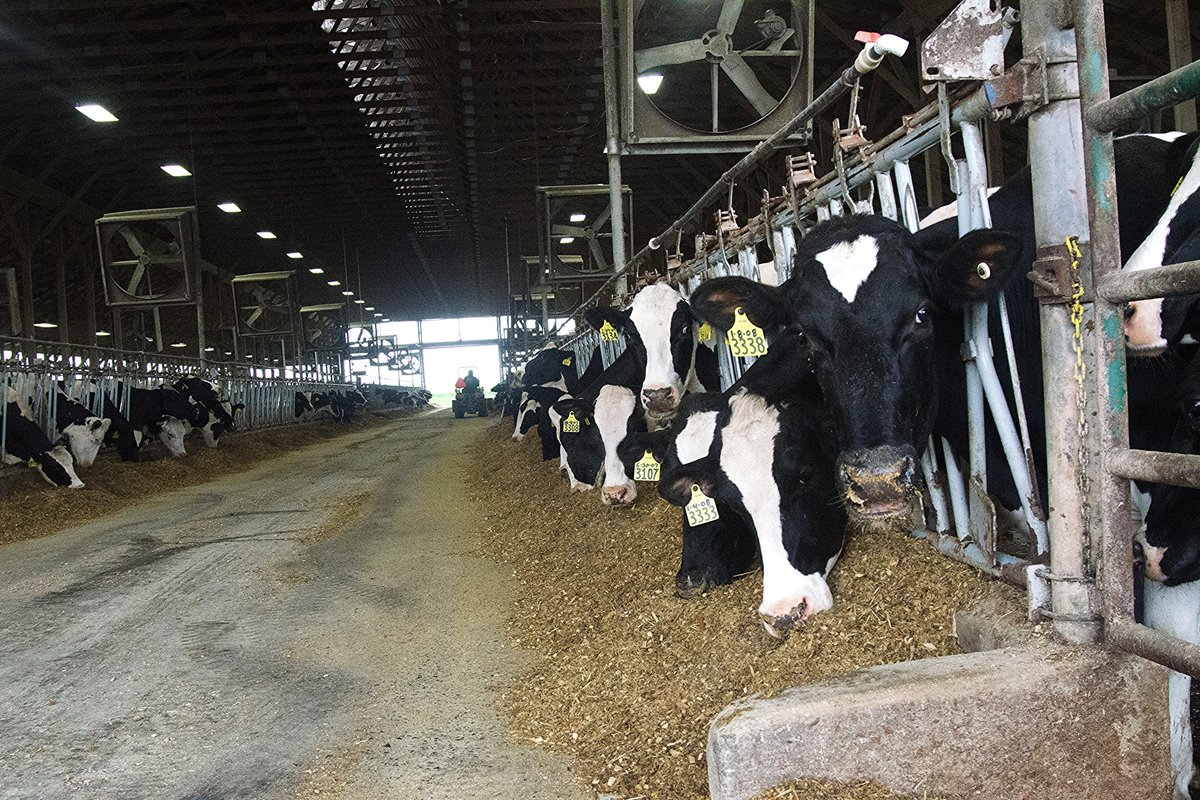
Photo: USDA, public domain (Wikimedia Commons).
A feeding plan for this period, agreed with your nutritionist, covers:
- Body condition. Body condition scoring in the dry period is a useful indicator, because over-conditioned cows are at higher risk of reduced dry matter intake and metabolic disorders.
- Intake after calving. A palatable ration, feed pushed up and space at the barrier for every fresh cow.
- Energy and fat metabolism. Early lactation draws on body reserves, and the liver has to process the fat that is mobilised.
- Protein quality. High-yielding cows need the right amino acids at the small intestine, not just crude protein in the ration.
- Minerals, vitamins and water. Review calcium and magnesium around calving, the vitamin and trace mineral package, and clean water close to feed.
This is where targeted nutrition fits. Our 3A Cholycoat 30% is a rumen-protected choline for transition cows. Unprotected choline is broken down in the rumen, with up to 98% loss of absorption, so we coat choline chloride with a layer of fatty acids that resists the rumen and releases choline in the small intestine. It supports fat metabolism and liver function during the transition period. We recommend 20–50 g per cow per day.
Our 3A Lycoat covers the protein side. Methionine and lysine are the main limiting amino acids for dairy cows, and both are degraded in the rumen. 3A Lycoat is a rumen-protected lysine in a lipid coating that passes the rumen and releases lysine in the small intestine. It supports milk yield and milk component levels as part of a balanced ration; we set the inclusion rate with your nutritionist.
What can supplements do for udder health, and what can't they?
Supplements to increase milk production in cows work best when they remove an existing limit: low intake, an energy gap, an amino acid shortfall or a period of immune challenge. They cannot make up for wet bedding, poor milking routine or a cow that needs a vet. Our guide to supplements to increase milk production in cows covers the yield side in more depth.
For dairy cow immune support, our VF Care is a feed additive for ruminants: an oral solution of garlic (Allium sativum) tincture, oregano, thyme and rosemary extracts and betaine hydrochloride. It supports immune function as part of the herd's nutrition programme. We recommend 75 cc twice daily for cows. VF Care is not a veterinary medicine and never a reason to delay a vet visit.
| Realistic to expect | Not realistic to expect |
|---|---|
| Support for intake, energy and protein supply around calving | Making up for wet bedding or poor milking hygiene |
| Support for immune function as part of the programme | Acting as a medicine for a cow with mastitis |
| Support for milk yield and components when nutrition was the limit | More milk when the limit is udder infection, comfort or water |
| A measurable change in your own records over a lactation | A visible change in the bulk tank within days |
When should you call the vet?
Mastitis needs a diagnosis, and any decision on medicines belongs to the vet. Call when:
- a cow has a high temperature and stops eating;
- the udder is hard, hot, swollen or painful, or the milk is watery, discoloured or has clots;
- the same cow has repeated clinical cases or keeps a high SCC over several monthly tests;
- bulk tank SCC climbs over several results and you cannot see why.
Ask the vet for a farm-specific udder health plan. European animal welfare guidance recommends regularly assessing each farm's key mastitis risk factors, mostly cow- and management-related, and basing the plan on them. Bacteriological tests on milk samples identify the bacteria involved and show whether to focus on the parlour, the bedding or the dry period. For how nutrition and the vet work together in a disease situation, see our article on nutritional support for cattle during foot-and-mouth disease.
Milk quality checklist: what to check, and how often?
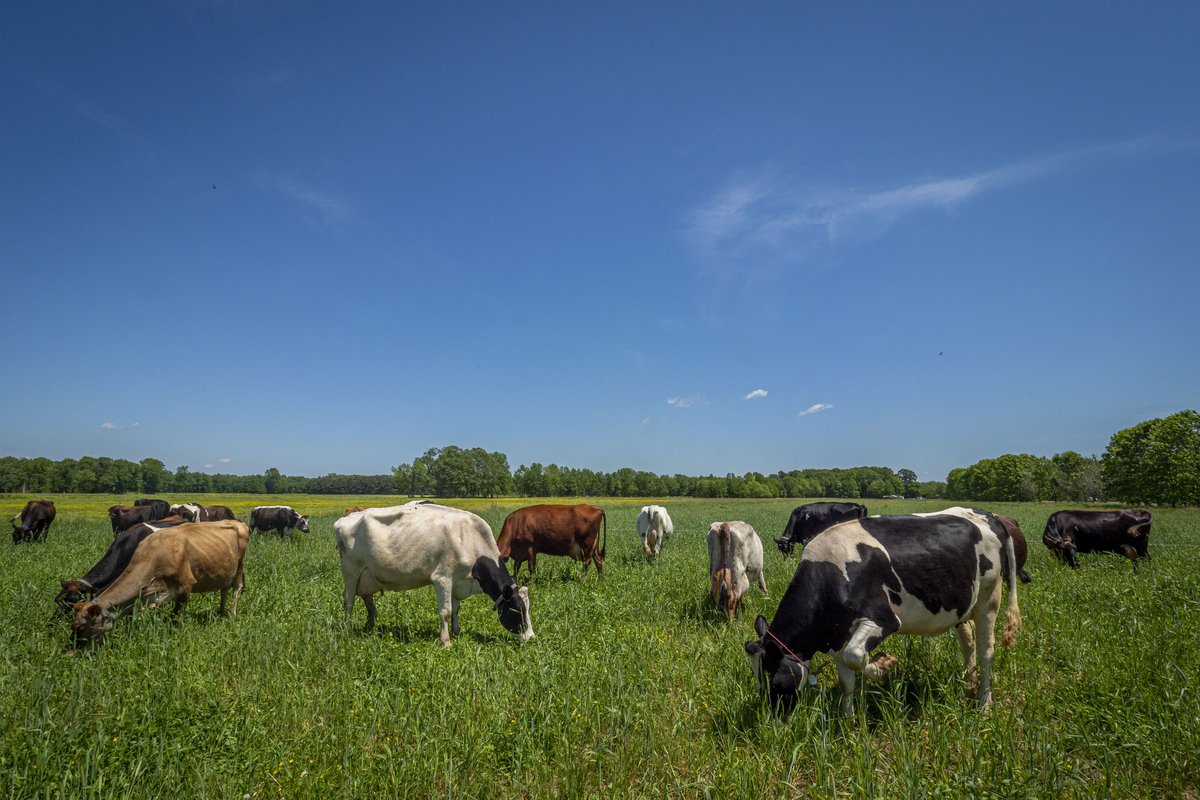
Photo: USDA, public domain (Wikimedia Commons).
| How often | What to check |
|---|---|
| Every milking | Foremilk in a strip cup; udder swelling, heat or pain; post-milking teat dip applied |
| Every day | Bedding dry and topped up; cow and udder cleanliness; fresh cow intake; clean water troughs |
| Every week | Teat-end and teat-skin condition; liners and vacuum |
| Every month | Individual cow SCC; cows above 200,000 cells/ml; clinical case log |
| Every bulk tank result | SCC trend against the EU 400,000 cells/ml criterion and your contract thresholds |
| Drying off and calving | Body condition score; dry cow and transition ration agreed with nutritionist and vet |
FAQ
What is a good somatic cell count for dairy cows?
The EU criterion for raw cow's milk is 400,000 cells/ml or less as a three-month rolling geometric average. Above 200,000 cells/ml, an individual cow is more likely to have an udder infection. Track the trend, not single results.
Can supplements fix a high somatic cell count?
No. A high SCC points to udder infection, and the answer is hygiene, bedding, the milking routine and the vet's diagnosis. Feed additives such as VF Care support immune function as part of that programme.
How can I increase milk production in cows naturally?
Remove the limits first: udder health, cow comfort, water, intake and a balanced transition ration. Our 3A Cholycoat 30% and 3A Lycoat support milk yield when nutrition is the limiting factor.
Is VF Care a medicine for mastitis?
No. VF Care is a feed additive that supports immune function. A cow with signs of mastitis needs a vet, who decides on any medicine.
The bottom line
Milk quality is decided in the parlour, the cubicle and the transition pen. Check foremilk, dip teats, keep bedding dry, feed dry and fresh cows well and read your SCC data every month. Then use nutrition where the cow needs it: energy around calving, amino acid balance in early lactation and immune function during periods of challenge.
To discuss a programme for your herd, contact us at office@3a-austria.eu or see our product pages for VF Care, 3A Cholycoat 30% and 3A Lycoat.
Sources
- European Union: Regulation (EC) No 853/2004, specific hygiene rules for food of animal origin, Annex III, Section IX (raw milk criteria).
- AHDB (Agriculture and Horticulture Development Board, UK): Mastitis in cows: somatic cell counts (SCCs). The 200,000 cells/ml individual-cow threshold is an industry guide, not an EU rule.
- FAO: Milking, milk production hygiene and udder health, chapter 4: Mastitis control.
- FAO: Small-Scale Dairy Farming Manual.
- EFSA Panel on Animal Health and Animal Welfare (2023): Welfare of dairy cows. EFSA Journal 21(5):7993.
- Product information: our product data for 3A Cholycoat 30%, 3A Lycoat and VF Care.